5 Tired Anime Tropes That Appear in Every Shonen Anime
Shonen anime was barely a blip on the radar in the 1990s, but the 2020s tell a different story. The extraordinary successes of recent shows like Jujutsu Kaisen and Demon Slayer proved the global popularity of the genre, with the latter’s Infinity Castle movie becoming the highest-grossing anime movie in history. Given its demographic, however, it’s not surprising that shonen anime features a specific set of narrative structures, recurring themes, and character archetypes. Many of these tropes are welcome, from tournament arcs to transformation sequences.
Fans also love heroic protagonists as much as they hate villainous antagonists, but there’s a problem when these tropes are stretched beyond their tensile limits. Far too many shonen anime tropes have become tiresome clichés, making shows come across as repetitive and unoriginal. They fail to push the genre’s boundaries, and instead fall back on age-old repetitions that feel like a breath of stale air. Fans have been complaining about a number of shone tropes for decades — in this list, we have considered the five most problematic examples that continue to hinder the genre.
5
Gratuitous Fanservice Keeps Dragging Shonen Anime Down
Fanservice has been a part of shonen anime since the very beginning, although not every series indulges in this now-ancient trope. The demographic of teens and preteens doesn’t require titillation — it’s actually creepy to create arousing art aimed at such young viewers. The oversexualization of female characters is a global concern that has seen only minor improvements in recent years. While anime isn’t the only perpetrator, the medium has a habit of mixing its hysterical energy with fanservice, making the concept take on whole new dimensions of distaste. The belief that fanservice is a marketing tool makes complete sense, but it also cheapens the overall story, especially in the case of otherwise great anime. Even worse, fanservice can come in a wide range of shapes, from beach episodes and bath scenes to hyperbolic physical proportions and suggestive camera angles.
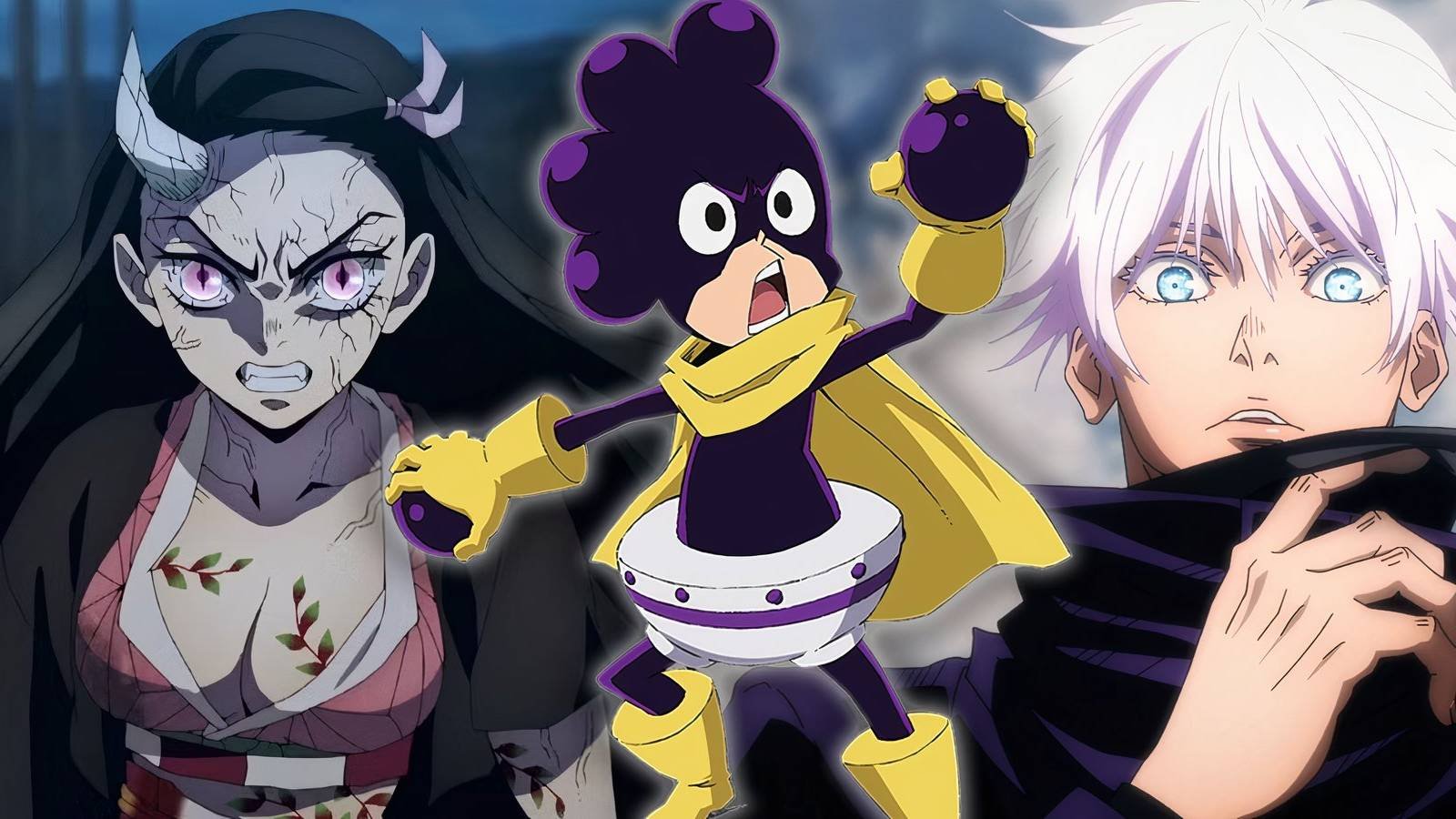
Several shonen anime oversexualize their women, including iconic series Fairy Tail, Bleach, One Piece, Black Clover, and My Hero Academia, not to mention the particularly problematic scene of Nezuko’s demon transformation in the Demon Slayer anime. Even Food Wars! — which successfully translated the culinary arts into animation — dabbles in fanservice by sexualizing its core premise. It might be subtle in some cases, as hinted at by the relationship between Momo and Okarun in Dandadan, or shockingly explicit in shows like Seven Deadly Sins and Kill la Kill. On the other hand, Kill la Kill is more of a satire than a direct appeal to the fanbase, effectively subverting the trope. Meanwhile, Naruto‘s Sexy Jutsu is a great example of something that has no place in modern anime.
4
Shonen Anime Characters Have to Stop Being So Shamelessly Perverted
Directly linked to fanservice and the oversexualization of women is the anime pervert trope. Shamelessness is played for laughs in shonen anime, further highlighting the complaints that real-world Japanese women have been making for decades. A man’s attraction to a woman is completely acceptable, but depicting those feelings through inappropriate behavior is not. Perversion is not supposed to be comic relief, even if characters like Dragon Ball‘s Master Roshi are beloved elements of the franchise. At this point, a trope that paints men as sexual perverts is false, offensive, and outdated. While the majority of male characters don’t participate in such behavior, they often refrain from stopping their depraved friends and allies. My Hero Academia‘s Minoru Mineta embodies this trope perfectly, resisting any and all attempts to change him.
More recent shonen anime like Jujutsu Kaisen and Demon Slayer are much better in this regard, though it must be acknowledged that Zenitsu’s cowardice overshadows his degeneracy. There are countless other ways for anime to provide comic relief — and perversions are among the least funny options. Sexual attraction isn’t something to be mocked, but shonen anime series rarely even show the other side. There are extremely few anime characters who openly desire women and treat them with respect, leaving the rest of them as caricatures of masculinity. Continuing to rely on this trope impacts how young boys treat personal boundaries and could potentially lead to harassment, along the same lines of “boys pull girls’ pigtails on the playground because they like them.” It’s high time for the shonen genre to leave the anime perverts in the distant past where they belong.
3
Power-Ups & Power Scaling Have to Be Justified Even in Shonen Anime
Anime battles work nothing like the real world, and if they did, they wouldn’t be a fraction as interesting. The shonen genre genuinely features some of the greatest fight sequences in the history of storytelling, animated or otherwise. Fans flock to their screens when their favorite series releases a battle-themed episode, and many of these fights end up popularizing their anime when shared virally across the world. And yet, there’s one nagging concern that keeps unraveling the explosive beauty of battle scenes: the last-minute power-up. While it’s true that combatants at the edge of defeat can get a second wind, it makes much less sense when it’s Super Saiyan 2. Power-ups will always be appealing because they offer heroes (and villains) another opportunity to keep fighting, but only when there’s enough justification for them.
The dramatic highs of a shonen anime climax are frequently quenched by inexplicable power-ups, which come with zero build-up or foreshadowing. In fact, the humans in Dragon Ball became antiquated when the Saiyans reached their pinnacles. Fans realized that Jujutsu Kaisen mangaka Gege Akutami made a mistake with Satoru Gojo’s incomprehensible power levels, because defeating the strongest sorcerer in the world would technically cause a paradox. The War arc of Naruto Shippuden saw Sasuke and Naruto reach a level that should have been impossible. Jotaro Kujo mysteriously acquired the same power as Dio Brando in order to defeat him in JJBA: Stardust Crusaders. Bleach is riddled with power-scaling inconsistencies, from Ichigo’s unfathomable victory against Kenpachi to numerous characters suddenly gaining Bankai — an ability that requires up to ten years of nonstop training. On many occasions, power just doesn’t feel earned in Shonen anime.
2
Shonen Anime Would Rather Focus on Any Man Than Strong Women
Eiichiro Oda refuses to add romance to One Piece (among the Straw Hats) because he insists his young male readers would not enjoy themes stereotypically associated with girls. By doing so, Oda has inadvertently validated the idea that anything feminine is beyond the scope of shonen anime, and that includes even the most badass women. One Piece alone has dozens of powerful female characters, but nearly all of their character arcs are somehow associated with men. And Big Mom’s existence is the exception that proves the rule. Replacing female growth with male accomplishments might be one way to keep audiences invested — the problem is that children need more than just male role models. With the recent boost in shonen anime’s popularity, the audience now includes as many female fans, who are either left out or outright insulted by the depiction of femininity. That said, One Piece is hardly the only anime suffering from this longstanding issue.
Despite being a part of their story’s main cast of heroes, characters like Bleach‘s Orihime, Naruto‘s Sakura, Dragon Ball‘s Chi-Chi, Berserk‘s Casca, Black Clover‘s Noelle, and Jujutsu Kaisen‘s Nobara feel more like token additions than anything else. Casca, a powerful warrior, is reduced to a helpless victim, whereas Nobara literally dies before the first half of JJK. Similarly, Nezuko is one of the most uniquely powerful individuals in the world of Demon Slayer, but her role has consistently been to encourage Tanjiro to achieve greater heights. Fans were most upset when Bleach revealed Unohana Retsu to be the First Kenpachi, fulfilling hundreds of episodes of foreshadowing, only for Kenpachi Zaraki to use her as a stepping stone. The best subversion of this trope, however, comes in the magnificent form of Major-General Olivier Mira Armstrong in Fullmetal Alchemist: Brotherhood.
1
Plot Armor Is Still the Biggest Problem in Shonen Anime
Plot armor can be described as an invisible, intangible force field between important characters and their deaths/defeats. This trope applies heavily when a fight’s outcome shifts in favor of the villain, although antagonists also have their fair share of plot armor. This phenomenon has plagued the shonen genre for decades, overriding logic and common sense in favor of narrative continuation. The trope undermines tension and weakens storytelling, a devastating combination that gradually leads to the erosion of emotional stakes. It’s worse when characters die and later come back to life, especially if their deaths had great meaning — Goku alone has experienced death and resurrection in numerous instances. On the other hand, fans might argue that killing off the main character is a terrible path forward for the story.
So let’s look at examples where minor characters have been protected by a shield of plot armor. One Piece‘s Usopp clearly has some combat talents, but he has also survived impossible situations considering his numerous limitations. Byakuya Kuchiki should have died in The Thousand-Year Blood War, but instead Bleach chose to kill Unohana and resurrect Byakuya stronger than ever. Mentors like My Hero Academia‘s All Might, Yu Yu Hakusho‘s Genkai, and Black Clover‘s Yami Sukehiro are pushed to the brink of death (or actual death), and their plot armor still manages to keep them breathing. It doesn’t seem to matter if the character willingly sacrifices themselves in a heartbreaking scene that provides them closure, like with One Piece‘s Pell. Death is an integral part of real life; even fiction needs to respect that.