Black Clover Spoilers: Magna Did Not Get Lucky Against Dante
Fans still call the Magna vs Dante fight a lucky win. Chapters 290 to 294 show a man who spent half a year building one spell for monsters exactly like Dante.
Warning: Full Black Clover manga spoilers ahead for chapters 290 to 294, including Magna Swing, Dante Zogratis, Zora Ideale, and the rescue of Captain Yami.
The win everyone refuses to respect
Every fandom has one victory it refuses to take seriously, and in Black Clover that victory belongs to Magna Swing. A commoner with weak magic stepped in front of Dante Zogratis, a devil host at the top of the Dark Triad, and beat him down. The easy explanation spread fast. Luck. A fluke. A spell that happened to work once. Chapters 290 to 294 tell a colder and better story. Magna did not stumble into that win. He walked into it carrying six months of work on his back, and the manga stops the fight in the middle to prove it.
Understand what was at stake when Magna made his choice. Chapter 291 shows his drive in plain terms, rescuing Yami. His captain was taken, his squad was scattered into a war it was never built for, and the men with royal blood and famous grimoires were not the ones standing in front of Dante at that moment. Magna was. The supposed joke character of the Black Bulls looked at the strongest wall in the room and decided the wall was his job. That decision alone should end the luck talk, but the manga goes further and shows the proof.
Why Magna vs Dante is trending again
This fight is back in the conversation because the anime finally reached it. Black Clover Season 2 premiered on October 3, 2026, and episode 5, The Highest vs. the Lowest, adapted Magna vs Dante on October 31. Shortly after it aired, the episode was reported at 9.9 on IMDb from more than 11,000 votes, a snapshot that will move but still says a lot. Anime only viewers are now asking the same question manga readers argued about years ago: was it luck? The chapters answer that clearly.
Six months ago, the flashback that changes everything
Chapter 292 opens its flashback with a heading that does all the work. Six months ago. Half a year before the Dante fight, while readers were watching other battles, Magna was already preparing for a fight nobody had assigned him. Chapter 292 has him say the spell took him half a year to make. Not a week of inspiration. Not a gift handed down in a crisis. Half a year of a man with almost no magic grinding away at a single idea because he knew a day was coming when effort would have to stand where talent usually stands.
The stated reasons in those pages are painfully human. Magna talks about facing an opponent with enormous magic. He talks about not dragging the Black Bulls down. That second reason is the heart of the whole arc. Magna was never chasing glory. He was a weak mage on a squad of monsters and prodigies, and he could feel the gap every single day. Soul Chain Death Match was his answer to that gap, built in private, over months, by a man who refused to be the reason his friends died. Luck does not keep a diary like that. Preparation does.
Zora, the runes, and the unglamorous work
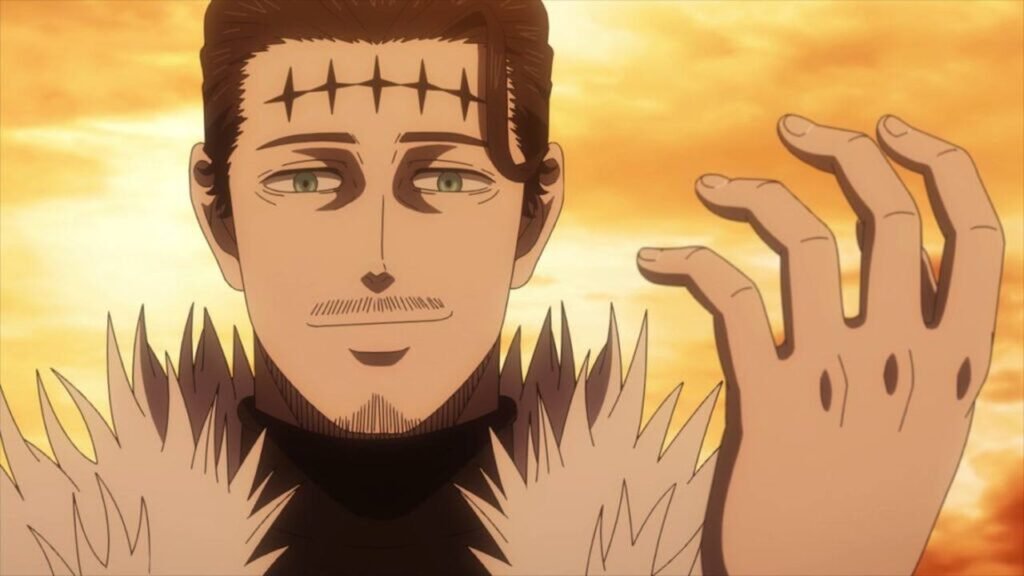
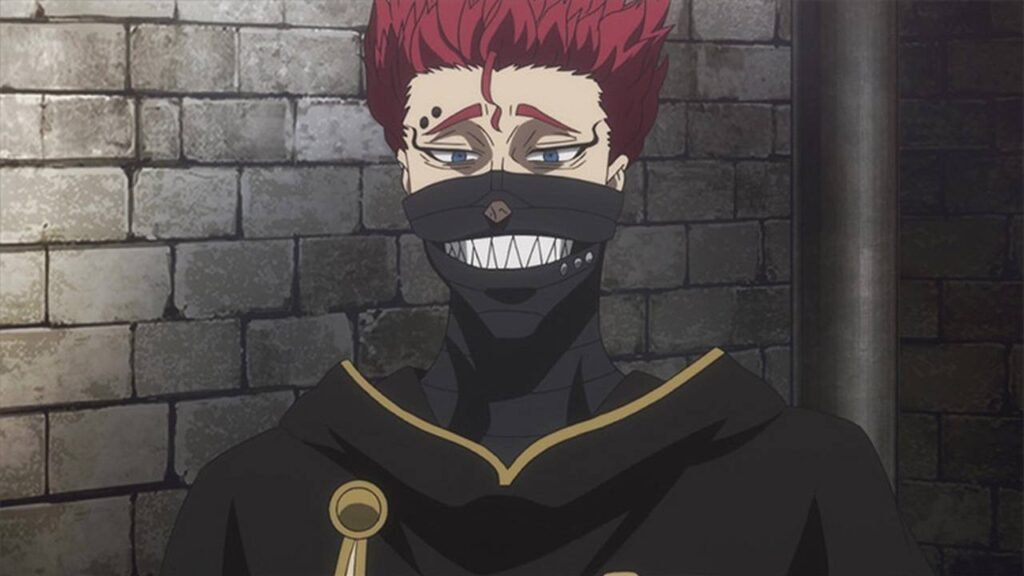
Chapter 292 shows Magna studying rune arrays under Zora, and that pairing matters more than it first appears. Zora is the squad’s trap mind, a fighter who wins by preparation, patience, and disrespect for raw power rankings. Of course Magna’s path ran through him. Fire magic alone was never going to close the distance to Dante, so Magna went and learned the most technical, least flashy craft available to him. Rune work is homework. It is study, repetition, and failure in private. There is no montage glory in it, and Tabata knows that, which is why the flashback lands so hard.
Chapter 293 completes the picture when Magna explains that he worked out the strategy and trained for it. Strategy and training, the two words fans never attach to him. The spell was not a desperate invention thrown out in the heat of the moment. It was a plan with a teacher, a method, and months of rehearsal behind it. When people call this win luck, they are really saying they never pictured Magna doing homework. The manga pictured it for them, page by page, and they skipped those pages because a fistfight is easier to share than a study session.
What Soul Chain Death Match actually does
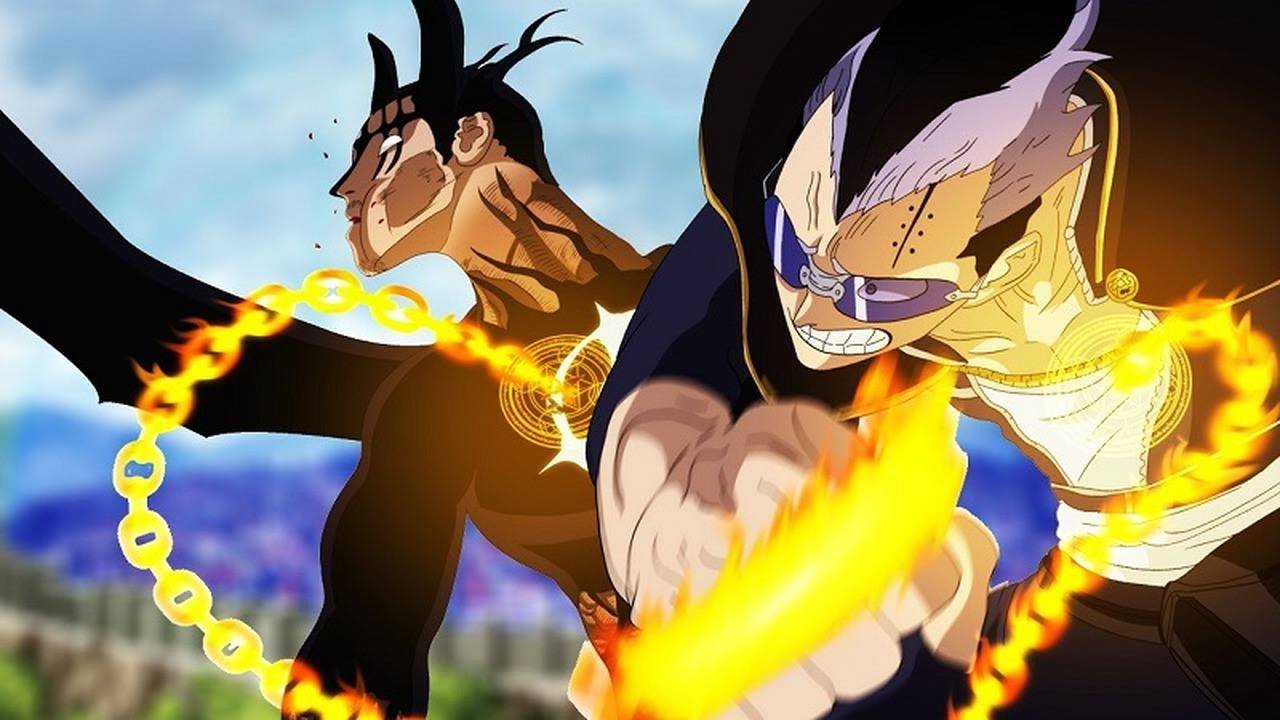
Chapter 291 gives the spell its name in the VIZ rendering, Soul Chain Death Match, and chapter 292 explains the brutal logic inside it. The spell links the two fighters and splits their combined magic equally between them. Magna does not steal Dante’s power and he does not borrow strength from nowhere. He drags them both to the same level and turns a magic contest into a fistfight. Against a devil host whose entire identity rests on having more, Magna built a spell that makes more worthless. It is the most honest spell in the series, a commoner’s whole worldview written as a technique.
The cost is printed just as plainly. Chapter 293 shows both men ending out of magic, and shows what Dante loses as the chain does its work. His gravity magic goes. His regeneration goes. His link to Lucifero goes. Everything that made Dante untouchable was rented power stacked on top of a man, and Magna’s chain stripped the stack away until only the man remained. Then Magna beat the man. That is not a loophole and it is not a trick in the cheap sense. It is a fighter identifying exactly why he loses on paper and spending half a year deleting every line of that paper, one rune at a time.
The honest line the manga will not cross
One point needs saying plainly, because the manga only says it through silence. Chapters 290 to 294 never state that Magna built this spell specifically for Dante. The purposes printed on the pages are general. An opponent with enormous magic. Ultimate opponents. A boss, a devil host, or an immortal. Magna built a weapon for the class of monster Dante belongs to, and chapter 291 shows him choosing to take Dante alone only when he actually faced him. Anyone who tells you the spell was designed for Dante personally is adding a line Tabata did not write.
The true version is better than the invented one. A spell built for one man is a plot device. A spell built for every monster who ever made Magna feel small, then carried into the biggest fight of his life by choice, is a character statement. He did not know Dante was coming. He knew someone like Dante was coming, because men like Dante always come for men like Magna, and he spent six months making sure that the next time one did, the story would end differently. That is not luck and it is not destiny. It is a worker preparing for a storm he could smell but could not name.
Beaten, not killed, and why that ending fits
Chapter 293 shows Magna beating Dante down, chapter 294 has Zora confirm the win, and the same chapter states plainly that Dante lost. The manga is just as plain about what did not happen. Dante was not killed. He is shown alive afterward, his body magic out of control. Some fans treat that as a lesser result, as if the win needs a corpse to count. I read it the opposite way. Magna’s whole fight was about proving a weak man could stand level with a monster and win the exchange in front of him. A kill would have belonged to a different story, one about vengeance or power. This story was about respect, earned in the mud, with both men empty at the end.
Zora confirming the win is the perfect final note, too. The teacher who taught Magna the runes is the voice the manga trusts to call the result. No crowd, no ceremony, just the squad’s coldest realist stating the fact. Dante lost. Magna Swing, the loud commoner everyone ranked last, beat a Dark Triad devil host in a fair fight he designed himself over half a year. If that is luck, then luck has a teacher, a training schedule, and a six month receipt, and most talented fighters in this series should be so lucky.
Where to read and watch Magna vs Dante
Magna’s fight runs through chapters 291 to 293 of Yuki Tabata’s Black Clover manga, with the aftermath in chapter 294. Viz Media publishes the English edition, and chapters are available through Viz’s Shonen Jump service and Manga Plus, though availability varies by region. The series now runs in Jump GIGA, so new chapters arrive in batches rather than weekly. Season 2 of the anime streams on Crunchyroll in many regions, and episode 5 is the one that covers this fight. For what happens next, read our Black Clover 295 spoilers, or see the full Black Clover timeline.
Magna vs Dante: quick answers
Who wins, Magna or Dante?
Magna. Dante loses and survives, with his body magic out of control.
What does Soul Chain Death Match do?
It links both fighters and splits their combined magic equally, which turns the fight into a contest of will and fists.
Which anime episode is Magna vs Dante?
Black Clover Season 2 episode 5, The Highest vs. the Lowest, which aired October 31, 2026.
Who helped Magna build the spell?
Zora, who taught him the rune work behind it.
My take: this is the single most disrespected win in Black Clover, and it is not close. This series runs on bloodlines, royal houses, ancient grimoires and devils handing out power, and in the middle of all that inherited greatness, the win that feels most earned belongs to the man with the least magic on the squad. Magna did not get a prophecy. He got a teacher, a pile of runes and six months. Tabata wrote a love letter to every reader who has ever been the weakest person in the room and decided to outwork the room instead of envying it. That is also why the anime episode landed the way it did. Viewers did not rally behind a power up. They rallied behind effort. My prediction: Magna vs Dante will be remembered as the defining episode of Season 2, and Soul Chain Death Match will become the go to example whenever fans argue that preparation beats talent. Call it luck if you want. The chapters call it preparation, and the chapters win.
Be honest, did you call Magna’s win luck when you first saw it, and where do you rank Soul Chain Death Match among the smartest spells in Black Clover now?
Sources: Black Clover chapters 290 to 294. Image credit: Black Clover anime stills featuring Magna Swing, Dante Zogratis, and Zora Ideale.