Disney’s Latest Series Is Going to Be the Breakout Isekai Anime of 2025
Every few years, a studio that has no business succeeding in anime manages to infiltrate the medium with a project that does not feel like a tourist experiment. Twisted-Wonderland is poised to be that project for Disney. The show is not entering into a vacuum; it’s going into a climate that knows exactly how to accept something like this. The target audience has already been trained by a decade of meta-isekai to accept worlds that run on imported logic and unfamiliar narratives. That foundation means Twisted-Wonderland does not have to justify its premise the way an anime like this would have ten years ago. The audience already knows how to watch this kind of story. What matters is whether the execution can clear the bar.
There is also the built-in advantage of iconography. Disney villains are among the most globally recognizable cultural figures on Earth. Translating them into a genre where character-driven attachment is key is not a superficial gimmick but a structural advantage. The move is less about asking “What if Disney made anime?” and more about taking the most psychologically vivid icons of Disney to a new genre. The appointment of a creator with real anime credibility signals the intention clearly. This is not a cash-grab live-action adaptation or a poorly planned project. This is an anime made by someone who knows what an anime needs to function. That is just one of many reasons why Twisted-Wonderland is set to be a hit. Twisted-Wonderland is arriving at a moment, in a format and into a genre climate that is unusually prepared to turn it into a phenomenon.
Disney Villains Meet Isekai Anime in Twisted-Wonderland
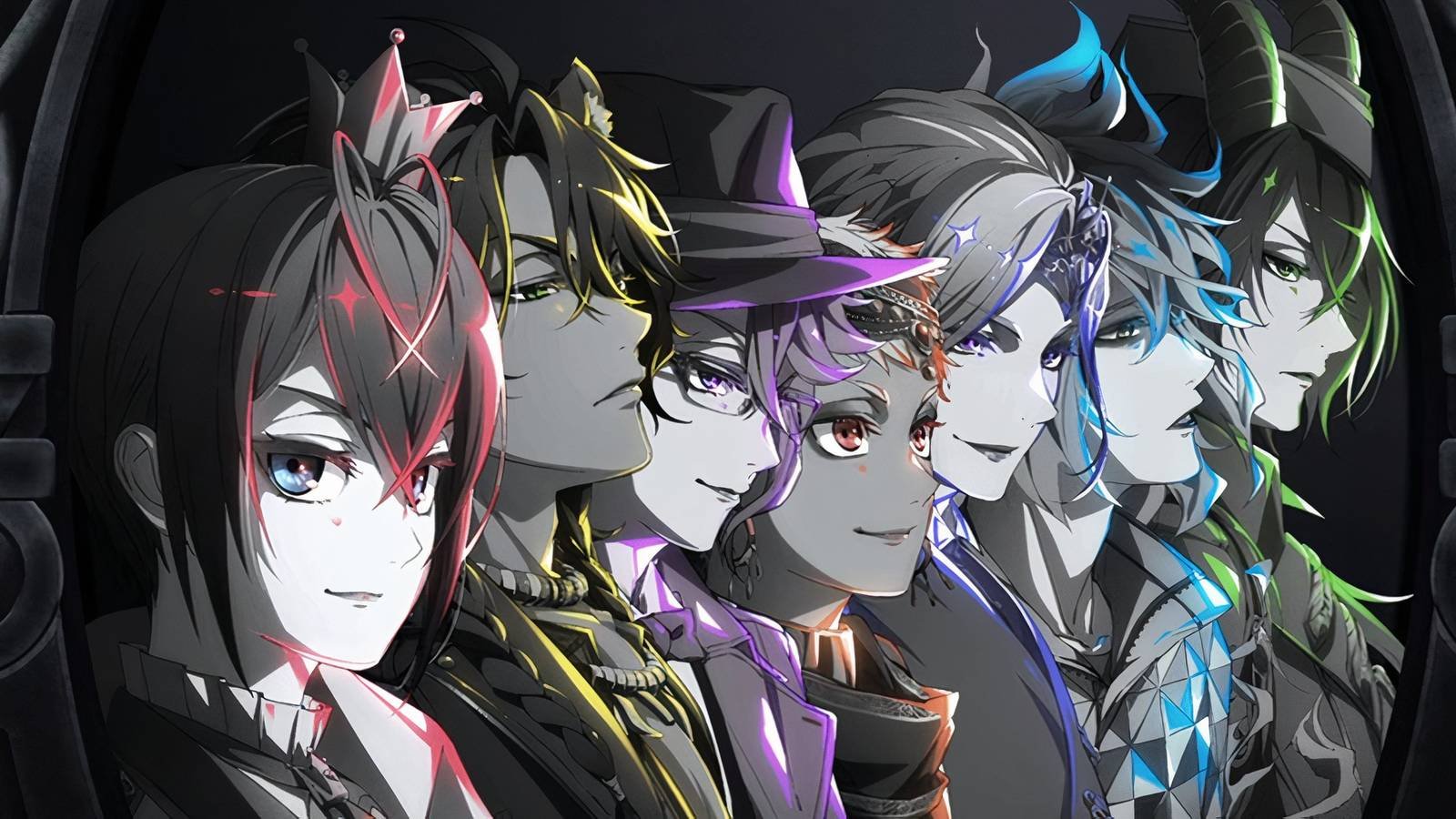
Twisted-Wonderland is not an original anime and is actually based on a mobile game produced by Aniplex in collaboration with Disney. The game is built around a school called Night Raven College where each dorm is inspired by an iconic Disney villain (Scar, Maleficent, Ursula, the Queen of Hearts, Jafar, the Evil Queen and Hades). The player-character is pulled into that world from “elsewhere,” stranded in a reality that operates on rules they did not originate.
This is the definition of an isekai premise. Twisted-Wonderland is not inventing a new identity but adapting to the next reasonable step from its premise. The reason this crossover works is that Disney villains have the kind of big personalities that are perfect for an isekai world. They are not subtle or psychologically simple; they represent big themes like pride and ambition. Their themes and motives are the perfect backdrop for a rich world for an isekai character to fall into.
Likewise, putting all these elements in a school setting introduces opportunities for hierarchies and rivalries that practically write themselves. Isekai is all about one person’s identity clashing with a new, often tough, structure, and villains are walking disruptions by definition. Because the concept originates from a game, Twisted-Wonderland already obeys the kind of character logic that anime fandom responds to. There are house identities and built-in lore that encourage attachment, not one-time viewing. The game was already widely popular for a reason. People love to see familiar characters in unfamiliar settings, and what characters are more familiar than Disney’s?
The game also sidesteps the cheapness of Disney winking at itself, and the anime will likely follow in those footsteps. Twisted-Wonderland does not stop to elbow the viewer about nostalgia. The game is based on Disney characters, but also invents its own lore and story by building on the moral core of the source material. The villains and their worlds are recontextualized and redefined throughout the story.
2025 Is the Perfect Time for Disney’s Anime Debut
If Twisted-Wonderland had launched as an anime in 2015, there would have been a lot of resistance. The anime would have been seen as a huge risk for a big company. In 2025, however, the anime is entering a market that is already conditioned to receive cross-border projects without blinking. Global streaming has normalized the idea that anime is not a domestic niche but an international cultural engine. Viewers now not only expect but celebrate hybrid productions and IP collaborations between industries that used to be walled off. Disney is not crashing a party, they are walking into a room whose doors have been wide open for years.
The timing also benefits from the phase the isekai anime genre itself is in. The era of shock-novelty is over; for isekai, what wins in 2025 is refinement. Shows are judged on the specificity of their hook, and cannot skate by on being merely another “story about a character transported elsewhere.” A premise built around villain-archetypes repurposed into an academy meets that demand cleanly. Twisted-Wonderland gives the genre a new angle without requiring the audience to relearn the basics. The idea is fresh without being foreign, and that is exactly what performs well today.
There is also fatigue with isekai protagonists built on power fantasy rather than other motivations. Viewers are bored with omnipotent leads who kill all stakes. Twisted-Wonderland sidesteps that entirely by anchoring itself in the social landscape of school. There are dorms and rivalries, but no unstoppable hero with ever evolving powers. And finally, Disney’s global distribution and marketing capacity comes in at a moment when anime does not need rescuing but amplification. Had this project appeared when anime still fought for mainstream legitimacy, Twisted-Wonderland might have been rejected as a corporate cashgrab. Now, fortunately, the conditions around this arrival are aligned.
The Mobile Game Already Proved There’s a Hungry Audience
Before the anime was even announced, Twisted-Wonderland had a live stress-test. The mobile game was not just another Disney tie-in venture. It had sustained engagement and a passionate and loyal base of players and fans. The game has fan-driven meta and long-running community output, the same markers that historically predict whether an IP can successfully make the jump to a different medium. A game can attract curiosity, but only a fandom sustains retention, and Twisted-Wonderland has a fandom.
Unlike many gacha-adjacent games with casts that blur into each other, this project anchors every dorm and character in a framework the audience can instantly understand. The villain DNA is already culturally coded, and that means users can begin forming attachments on day one without any friction. The faster attachment forms, the more exportable the IP becomes. Its success also matters because the Twisted-Wonderland game proves the one thing producers needed to know before making the anime. Now, they know for sure that people care enough about these villain-coded characters to follow them into another medium. The fact that Twisted-Wonderland produced a stable, vocal audience proves that the appeal is not one-off. The characters are well-liked, and the idea is scalable.
It’s crucial to note that the game achieved this without leaning on Disney nostalgia as its primary fuel. The fandom discourse was not “remember this character?” but focused on the character dynamics and arcs. That distinction matters because nostalgia moves around, but core fans rarely do. When an adaptation begins with an audience already behaving like a fandom instead of mere consumers, the road to success is smoother. All they have to do is ensure that the final project matches or exceeds fan expectations.
Yana Toboso’s Track Record Speaks for Itself
Yana Toboso’s name alone gives Twisted-Wonderland more credibility than a typical mobile-game adaptation. Long before this anime existed, she gained popularity with Black Butler. That manga proved that she understands how to design characters who are theatrical and villain-coded but still emotionally relatable. Her style is structural, as well as aesthetic, and she was the perfect choice to flesh out this concept and design the characters for the original mobile game. She writes morality as something performative, and designs worlds where rule-bound systems collide with deeply sentimental characters. That is the exact dynamic an isekai anime built around Disney villains needs to work on-screen.
Additionally, unlike many creators whose fame is attached to a single breakout, Toboso’s staying power matters. Black Butler has lived through trends, reboots, tonal pivots, and audience turnover. A writer who can shepherd a property through that many lifecycle shifts understands how to construct stories that do not evaporate after the hype. The IP has survived for years and will likely dominate the 2025 anime scene because there is substance, not just style.
Toboso, as well as directors Shin Katagia (Wolf Girl and Black Prince) and Takahiro Natori (My Hero Academia), also solve the credibility problem that plagues most corporate anime crossovers. When a Western mega-brand finances an anime, audiences assume that creative control has been sanitized to death. Toboso’s authorship disproves that suspicion because her voice is recognizable. Fans of her work can tell when she writes moral poise and aristocratic cruelty.
So, even before the first trailer, her name being attached to the project signaled that Twisted-Wonderland will not be an empty marketing object. The anime is aware and respectful of the medium and intends to innovate in that lane. Twisted-Wonderland has all its cards lined up to be one of the breakout hits of 2025 anime. All that’s left is to stick the landing.