3 Best Netflix Anime to Binge This Weekend (Oct. 24-26)
Netflix has quietly built one of the richest anime libraries on any streaming platform. It started out with a few good licenses, and has come to be a place for original stories, innovative experiments, and reimagined classics. Year by year, the platform has attracted some of Japan’s top creative shops and global storytellers, and it presents a lineup that is both daring and nostalgic. The good news is that many of these series can be finished off in a weekend, so they are ideal to binge-watch if there is some idle time available to get engrossed in another world.
Among the sea of options, Cyberpunk: Edgerunners, Blue Eye Samurai and Pluto are some of the most dense and rewatchable programs Netflix has to offer. Each is short enough to finish over the course of a weekend, but dense enough to linger long after the credits roll. For those seeking action with depth, incredibly compelling characters, and storylines that move beyond good vs. evil, these are the shows that put Netflix anime on its highest level.
Cyberpunk Chaos Meets Human Tragedy in Edgerunners
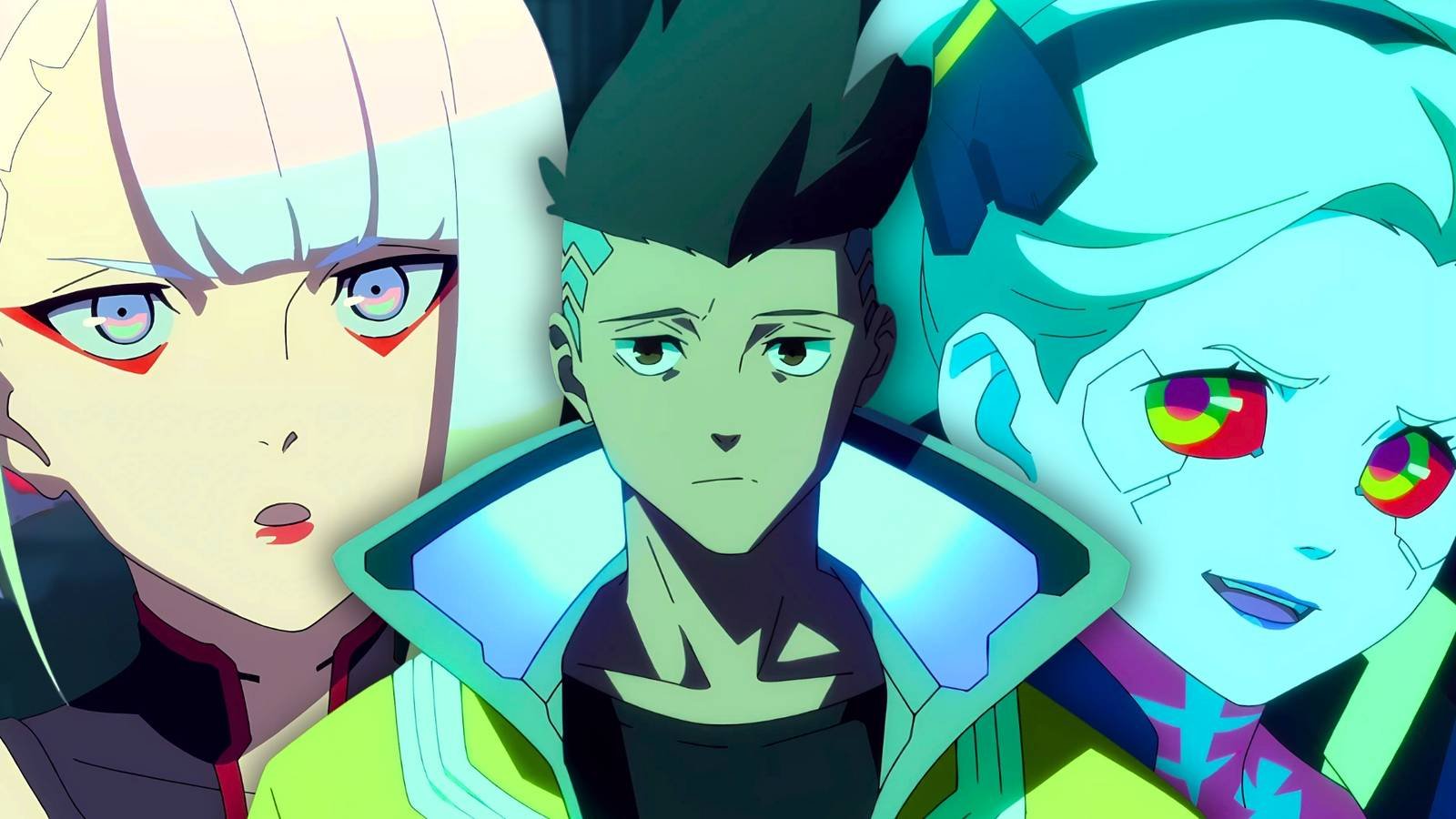
Cyberpunk: Edgerunners is the rare kind of anime that burns bright and fades slowly, both in length and in impact. With only ten episodes, the series tells a complete story set in the brutal, high-tech world of Night City. The story follows David Martinez, a streetwise student who loses everything in one tragic moment. After finding an illegal cybernetic implant known as the “Sandevistan,” David becomes something more than human, and that transformation sets him on a path toward both greatness and ruin. Studio Trigger brings its trademark energy to the screen here. The animation itself pulses with neon color and frantic movement, reflecting Night City’s high-speed, deadly world. Every action sequence is a work of kinetic art, bullets, blood and holograms flashing in a violent dance. The studio’s bold style gives the city its own life.
Yet, beneath the explosions and body modifications lies a deeply human story. Every character in Edgerunners dreams of freedom, but the city always takes more than it gives. Each episode dives further into David’s descent. As he infuses himself with more and more cyberware, his identity begins to erode. What starts out as survival becomes an obsession. The show never forgets the human aspect of this war, illustrating how a search for purpose by one young man can go tragically awry when fueled by desperation and loss. His connection with Lucy, a netrunner who dreams of traveling to the moon, brings humanity to an otherwise desolate world. Their relationship is the emotional core of the series. Whether it’s David’s growing obsession or Lucy’s wish, their aspirations are as fragile as the technology that supports them.
What sets this anime apart from other cyberpunk stories is just how intimate it is. David’s isn’t a story about revolution or technology. It’s an impossible battle to remain human in a world constructed to eliminate humanity. Each episode drives that message home with heartbreaking clarity. The soundtrack serves to make even the quiet moments hit like an emotional punch. By its end, Cyberpunk: Edgerunners is not just a visually stunning adaptation of a video game. It’s a complete, tearful tale of what ambition costs, and how much dreams can implode. Not many anime can balance spectacle and soul as evenly, and not many leave a mark that lasts so long after their end.
Blue Eye Samurai Is a Tale of Revenge Told in Fire and Steel
Blue Eye Samurai gives the classic revenge story a makeover and makes it stunning and surprisingly human. Set in Edo-era Japan, the series follows half-breed swordwoman Mizu, who was born to outsiders in a world where outsiders are viewed as monsters. Marked and outcast for her blue eyes, Mizu lives her life as an imposter, day and night, pursuing the men who gave her life. Her path is blood-soaked but never void of rage, spurred by raw agony and a need to belong. The animation in this anime is among Netflix’s best. It’s a combination of traditional 2D with high-definition 3D that creates a vivid world that looks like animated art. Every duel is staged and plotted, nearly balletic, yet the gore is real and heavy.
Mizu’s tale unfolds like a campfire story, with pockets of silence dispersed between moments of violence. While its pace is fast and its imagery breathtaking, the anime never forgets to feel its way through. Blue Eye Samurai also concerns itself with issues that few revenge stories ever consider. What happens after vengeance? What remains when all the people on the list are dead? Through Mizu’s ordeal, the series illustrates how the desire for justice can consume the soul it wants to protect. The supporting characters like Akemi, Ringo and Taigen give heart and humor to the story.
The voice cast, with Maya Erskine and Kenneth Branagh, delivers stunning performances that elevate each line to new heights. The anime’s writing marries English-language monologs with Japanese cultural heritage, giving it a global voice without compromising authenticity. Each episode culminates in a heartbreaking yet justly earned conclusion, proving that the greatest revenge stories are ones that challenge the cost of revenge itself. With its realistic characters, cinematic scope and fearless storytelling, Blue Eye Samurai is among the top Netflix original anime. It’s brutal and lovely, harsh and poetic. It’s a modern-day samurai epic that’s a perfect choice for a weekend binge.
Pluto Is the Ultimate Sci-Fi Mystery Reimagined
Pluto transforms a beloved manga classic into one of the most thoughtful anime mysteries ever made. Adapted from Naoki Urasawa’s reinterpretation of Osamu Tezuka’s Astro Boy chapter “The Greatest Robot on Earth,” humanoid detective Gesicht examines a series of human and high-end robot murders. All the victims have a mysterious symbol, a pair of horns left at the crime scenes, in common, which points toward a conspiracy with the upper rungs of society. Contrary to the majority of science fiction thrillers, Pluto lingers, moving at a slow, reflective pace. It’s about loss and morality, not action or explosions. Every episode adds depth to a world where machines have achieved consciousness but still struggle for acceptance.
Gesicht’s investigation sets him face-to-face with the questions of identity and the value of life. The muted melancholy of his voice and the empathy he shows others make him one of the most human of anime characters, despite not being human himself. The animation, in the capable hands of Studio M2, brings Urasawa’s drawings to life with impressive attention to detail. Shadows creep over futuristic cityscapes, and faces are weighted with unspoken meaning. The score of the anime also complements its mood. Even when the story does slow down, each shot is meaningful.
At its core, Pluto is not just a detective story; it’s a reflection on the human condition as it concerns technology and the cost of progress. The heart of the drama resides not in the mystery itself, but in how the people deal with loss and prejudice. Each encounter leaves a lingering hurt, a reminder that empathy is the one thing machines and humans must have in common to live together. By the end, Pluto becomes a work of art in restraint and emotion. The anime does justice to Tezuka’s vision while also opening the story up into something more introspective. In a sea of action shows that are quick on the draw, Pluto takes the risk of slowing down and asking the hardest questions of all.