10 Most Important Mech Anime Of All Time
Mecha anime has always represented something far greater than just giant robots and epic battles, it’s been a mirror of humanity’s ambitions, fears, and technological dreams. From the genre’s early days, creators have used mechanical behemoths as tools to explore psychology, politics, romance, and rebellion. Over the decades, the best mech series have transformed the anime landscape, influencing storytelling across the world.
While hundreds of mecha series have come and gone, only a select few truly left their mark on history. These ten titles didn’t just shape the genre, they changed how audiences viewed anime itself. From redefining heroism and mecha design to challenging the nature of war and identity, these are the mech anime that reprogrammed history one metallic heartbeat at a time.
RahXephon
When RahXephon debuted in 2002, it was often compared to Neon Genesis Evangelion, but its unique identity soon shone through. Mixing mythological motifs with music as a weapon, it explored the idea of reality being reshaped through sound and emotion. The mechs, called Dolems, weren’t just tools of war, they were instruments harmonizing with the human soul.
Its blend of romance, metaphysics, and artful direction made it an ambitious work that balanced science fiction with lyrical beauty. RahXephon dared to weave questions about identity, creation, and destiny into an operatic narrative. While divisive, its legacy endures as a masterclass in how mecha anime can marry the abstract and the human without sacrificing grandeur.
Gurren Lagann
Studio Gainax’s Gurren Lagann (2007) exploded onto the scene with the force of a drill breaking through heaven itself. A spiritual successor to older super robot shows, it embodied pure optimism and boundless energy. The show’s mantra of “believe in the me that believes in you” became an anthem for anime fans everywhere.
More than just a spectacle of absurdly massive robots, Gurren Lagann is a love letter to the human spirit’s refusal to be contained. It celebrates passion, perseverance, and evolution, literally expanding the scale of its universe with every episode. Its influence reshaped how modern anime could blend parody, heart, and heroism into something transcendent.
Eureka Seven
At first glance, Eureka Seven (2005) seems like another teenage-pilot-meets-giant-robot story. But beneath its sky-surfing mechs and psychedelic visuals lies one of anime’s most profound coming-of-age tales. Renton and Eureka’s love story unfolds amid a backdrop of ecological collapse, warfare, and the search for belonging.
The series redefined how emotional depth could coexist with mecha action. Its use of music, surfing metaphors, and airborne mechs reflected both rebellion and freedom. Eureka Seven’s innovative animation and emotionally layered writing helped prove that mecha anime could tell deeply human stories while still delivering breathtaking action and worldbuilding.
Code Geass: Lelouch of the Rebellion
Few anime series have blended political intrigue and mecha warfare as elegantly as Code Geass: Lelouch of the Rebellion (2006). At its core, it’s a Shakespearean tragedy masked as a rebellion against tyranny. Lelouch vi Britannia’s descent into antiheroism transformed him into one of anime’s most complex protagonists.
The Knightmare Frames, while visually impressive, were merely extensions of Lelouch’s intellect and ambition. What made Code Geass revolutionary was its fusion of strategic warfare, moral dilemmas, and relentless pacing. It blurred the line between justice and vengeance, influencing a generation of storytellers who wanted to combine intellect, spectacle, and heart.
Neon Genesis Evangelion
When Neon Genesis Evangelion aired in 1995, it redefined not only the mecha genre but anime as a medium. Hideaki Anno’s magnum opus broke away from the genre’s conventions, using giant biomechanical “Evas” as metaphors for depression, trauma, and existential dread. It was mecha as psychological therapy and cultural revolution.
Every frame of Evangelion feels deliberate, its haunting imagery and fractured characters still inspiring analysis decades later. The series’ willingness to expose human fragility amid apocalypse resonated worldwide. More than a show, Evangelion became a cultural mirror reflecting peoples collective struggle for meaning in an indifferent universe.
Aldnoah.Zero
Aldnoah.Zero (2014) arrived during a time when the mecha genre was in flux, revitalizing it through stunning visuals and moral ambiguity. Its story of Earth versus Mars showcased how technology, and the arrogance that comes with it, can define the course of civilization. The Aldnoah technology served as both salvation and curse, amplifying humanity’s hubris.
Its calculated battles and cold, logical protagonist, Inaho Kaizuka, made the series stand out. Aldnoah.Zero emphasized tactics over brute force, turning each fight into a chess match between intellects. Though polarizing, it reignited interest in high-concept mecha narratives and introduced a new generation to the genre’s cerebral side.
86 Eighty-Six
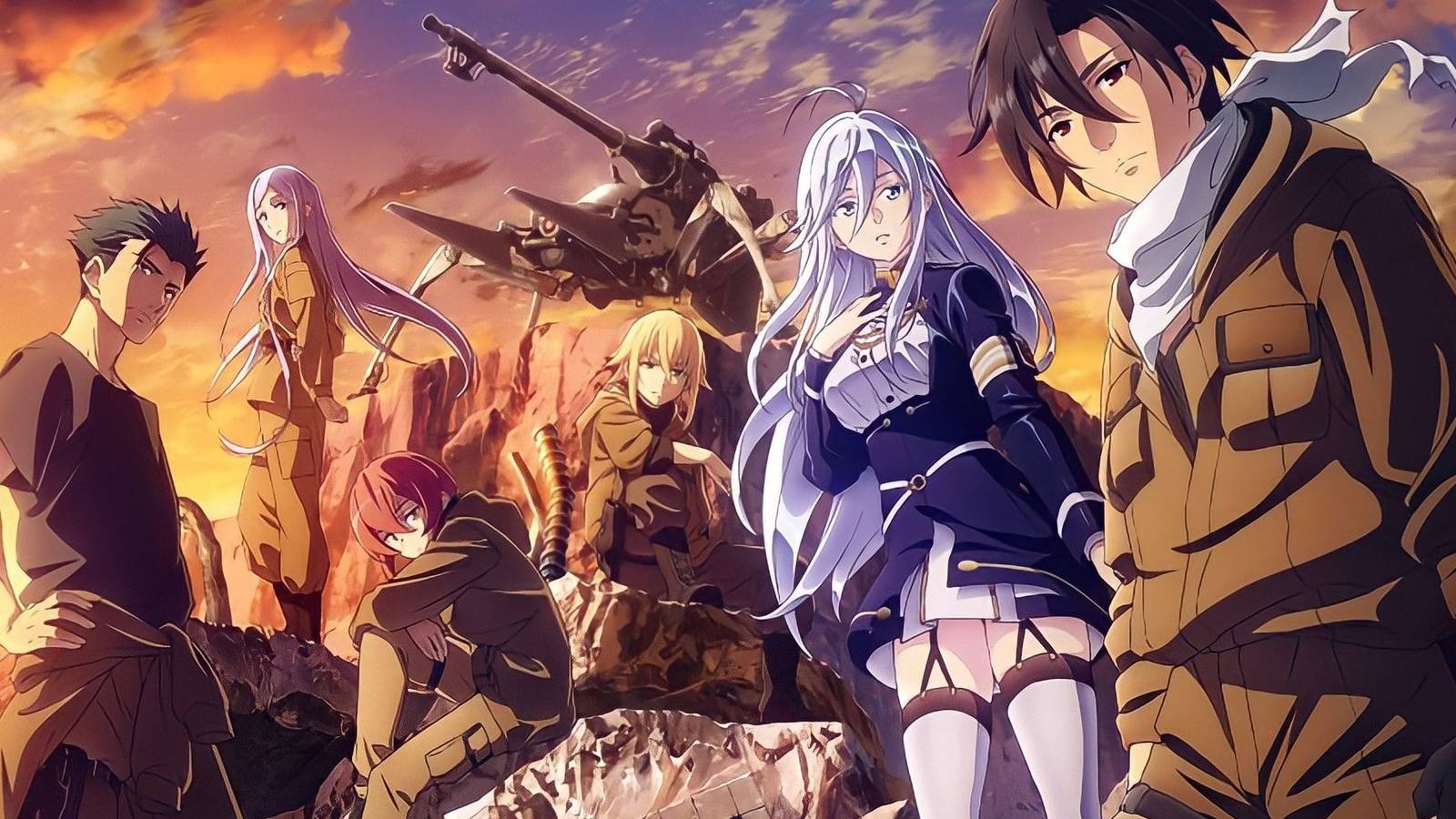
86 Eighty-Six (2021) brought a rare emotional sophistication to modern mecha anime. Set in a dystopia where soldiers from a discriminated minority fight in unmanned mechs for a privileged nation, it’s a searing critique of dehumanization and propaganda. The series turns the battlefield into a graveyard for forgotten souls.
Its characters, especially Shinei and Lena, embody the pain of separation between those who fight and those who command. 86 Eighty-Six is not just a war story; it’s a requiem for the voiceless. Its powerful writing, haunting direction, and moral clarity secured 86 Eighty-Six’s place among the most important mech anime of the 21st century.
Transformers
Before it became a global multimedia empire, Transformers began as a Japanese-American collaboration that changed how the world viewed mecha. The 1980s Transformers anime and toy line introduced robots that could transform into vehicles, capturing imaginations everywhere. It wasn’t just a gimmick, it was a reimagining of identity, adaptability, and heroism.
Optimus Prime’s noble leadership and Megatron’s ruthless ambition elevated Transformers beyond marketing into modern myth. Its fusion of American storytelling and Japanese animation created a transpacific cultural force that inspired countless successors. Decades later, its influence remains visible in everything from animation to blockbuster cinema.
Macross
Super Dimension Fortress Macross (1982) revolutionized the mecha genre by blending love triangles, pop idols, and space warfare into a single cohesive narrative. It proved that giant robot battles could coexist with romance and music as emotional weapons. The inclusion of idol Lynn Minmay’s songs as tools of hope was groundbreaking.
Beyond its thrilling battles, Macross humanized war and inspired global movements in animation and music. Its generational storytelling and fusion of sci-fi with pop culture gave birth to an empire of sequels and spin-offs. Without Macross, modern mecha, and even Gundam’s evolution, would look very different.
Mobile Suit Gundam
No list of genre-defining mech anime is complete without Mobile Suit Gundam (1979). Yoshiyuki Tomino’s vision of “real robot” warfare forever altered anime’s trajectory. Gone were invincible heroes and colorful villains, Gundam introduced political nuance, moral grayness, and the emotional cost of war. It was a revolution of realism.
The RX-78 Gundam became an icon of both anime and Japanese culture, symbolizing humanity’s ingenuity and self-destruction. The series spawned countless sequels, model kits, and creative imitators. Gundam did not just change anime, it created a cultural institution that continues to inspire generations of storytellers and dreamers alike.
- Created by
-
Yoshiyuki Tomino
- First Episode Air Date
-
April 7, 1979
- Cast
-
Tôru Furuya, Shūichi Ikeda, Hirotaka Suzuoki
The Gundam franchise is a cornerstone of mecha anime, featuring giant robots known as “mobile suits” in various wartime settings. Originating with Mobile Suit Gundam in 1979, it explores complex themes of war, politics, and humanity through the struggles of pilots who navigate these massive machines. The franchise spans multiple timelines and universes, creating a rich tapestry of interconnected stories and standalone narratives.