X Anime That Make Less Sense Than Neon Genesis Evangelion
The classic mecha anime Neon Genesis Evangelion is still one of the most highly acclaimed anime of all time, and its deconstructive tone made for a watershed moment within the medium. Unfortunately, its sense of mythology and especially its controversial final episodes made for a sometimes head-scratching experience. For as much as these traits are associated with it, the classic isn’t the only offender in these regards.
There are some anime that are even more esoteric and arguably nonsensical than Evangelion, and part of this is due to them being plagued by similar issues. From poorly-planned backstories to rushed endings, these anime left many fans in bewilderment by the end. Thus, while they might not be as well-known as Evangelion, they’re just as confusing to some.
Cromartie High School Is a Ridiculous Delinquent Anime
Initially, there’s seemingly nothing in common between Neon Genesis Evangelion and the comedy anime Cromartie High School in terms of the themes or plot. Where they are similar, however, is when and how they don’t make sense. While Evangelion might be known to cause headscratching through its infamous ending, Cromartie does that throughout its entire run.
Cromartie High School not only has incredibly weird concepts for a relatively grounded delinquent anime, but it makes the jokes even funnier by failing to explain these elements. There are only a few times when things are hinted at as not being quite right, but for the most part, it’s a miasma of ridiculousness. It’s thankfully more consistent in this lack of context than Evangelion, even if the result is a gang or delinquent anime that makes less sense than Third Impact.
Paranoia Agent Makes Sense Until It Doesn’t
Paranoia Agent is a psychological thriller classic of an anime, with the 2000s Adult Swim favorite diving deep into the concept of urban legends. The story involves a mysterious “bat boy” who goes around town hitting people on the head with his baseball bat, and there seems to be more reality to these local assaults than even the cops initially realize. Of course, due to the nature of the story, there’s a big question as to where reality ends and fiction begins.
Paranoia Agent‘s narrative begins to fall apart a bit by the end, however, and this is where the blurred lines of fact and fiction become too muddled. Given how the story is told up to that point, it’s both less and more jarring than the conclusion of Evangelion. Of course, it’s not nearly as iconic, but it and every confusing moment are still worth watching.
Serial Experiments Lain Is Esoteric Through and Through
Much like works such as the original Digimon anime, Serial Experiments Lain reflected the growing presence of the internet while foreshadowing the rise of social media. Lain herself is a loner who’s largely overlooked by her disconnected peers and family, but she finds new purpose in the digital world of The Wired. The result is a narrative that doesn’t always give easy answers, with the ending actually meant to have been more divisive than it was.
The creators behind Serial Experiments Lain expected more distinction between the Western and Eastern reception of the anime. If anything, it’s only now becoming truly relevant, with its sort of pre-cyberpunk reality becoming an everyday norm. The rules of The Wired and the story as a whole aren’t especially cut and dry, however, which puts it in the realm of Evangelion.
Utena Still Reigns as One of the Most Surreal Magical Girl Anime
One thing that the Neon Genesis Evangelion anime is known for is its symbolism, with a lot of this being merely empty rhetoric that made it seem smart. A similar anime from the same era was in a completely different genre, and its use of artistic symbolism could be even more confusing. Revolutionary Girl Utena was to magical girl anime what Evangelion was to mecha, and it revels in surreal symbolism that doesn’t always make the most sense.
Utena was when anime as a whole began to try to be really psychological, and these elements may or may not be obvious to those watching them. Many of the themes involving gender and other ideas might be more relevant today, but that doesn’t make them more obvious in the anime itself. Thus, these narrative aspects are almost certain to go over viewers’ heads just as much as a certain mecha anime.
FLCL Has Never Made Sense
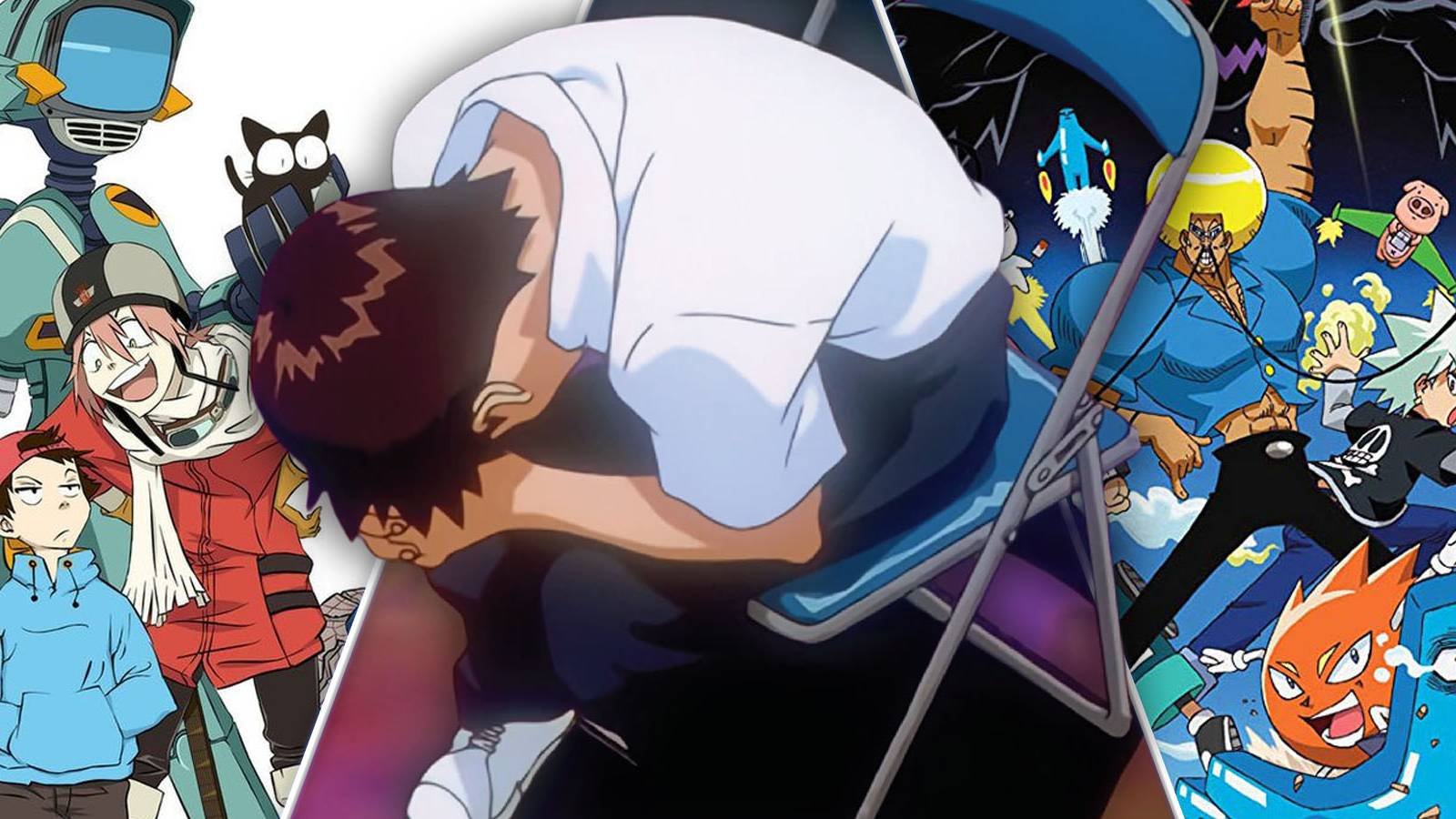
Though it has the bones of a coming-of-age adventure story, at its heart, FLCL is one of the most random and nonsensical anime ever made. Like the classic Evangelion anime, it was produced by Gainax, cementing the studio as the home of more experimental works. Its loose plot involves an alien girl named Haruka and her fight against the machinations of the Medical Mechanica company, though even the anime itself loses sight of this.
FLCL eventually becomes a series of strange and utterly random ideas, with robots sprouting from the male protagonist’s head in incredibly weird detail. Many who’ve seen it several times still struggle to explain the actual plot, which meanders in the best (yet most confusing) way. It’s still revered for this, however, and it’s seen as much better than its multiple failed follow-ups.
Ideon Was the Original Evangelion
Space Runaway Ideon is largely seen as a sort of prototype Evangelion, though this only manifests in the ending. For most of its run, Ideon was a veritable halfway point between a Super Robot anime and a Real Robot anime, largely being closer to the latter. This makes the eventual conclusion even stranger, and it’s even more of a jarring shift than when similar ideas were used in Neon Genesis Evangelion.
The Ideon mecha was revealed to essentially be a god, and the true ending of the anime wasn’t seen in the final episodes. Instead, the actual conclusion was seen in a movie ending that killed off and rebirthed the human race. This was definitely where Evangelion got the idea, but the way it’s done feels even more out of left field. Likewise, the continued return to Evangelion through new entries and the Rebuild of Evangelion films has given that brand a fleshed out mythos, whereas Ideon remains more esoteric.
Nichijou Is One of the Greatest Anime Comedies
The confusing mythos of Evangelion is partially so dense due to the serious nature of the anime, making it hard to accept when certain elements aren’t quite easy to understand. On the other hand, the comedic Nichijou surpasses all other anime in terms of how little sense it makes. Surreal in the most unexpected ways, Nichijou throws random and unexplained concepts mile-a-minute through some of the strangest comedy in the medium.
It’s not uncommon for characters to randomly turn their arms into firearms in Nichijou, with out-of-nowhere wrestling matches between school principals and deer just as common. There’s little set-up or explanation for these scenes, which is a big part of the joke. It’s a different kind of nonsensical storytelling compared to Evangelion, but this is a big part of why it works so well.
Bobobo Is One Nose Hair Away from Making Sense
When it comes to making a complete lack of sense, there’s no anime that’s quite as random or downright stupid as Bobobo-bo Bo-bobo. In many ways, the basic premise is essentially a parody of the post-apocalyptic classic, Fist of the North Star, but it’s much less serious than that work. Featuring a world ravaged by an evil empire intent on promoting baldness, the world is protected by Bobobo, who uses the Fist of the Nose Hair to defend the innocent.
If the basic premise wasn’t weird enough, the events in Bobobo almost never make sense and randomly jump from one thing to another. Even in fight scenes, the characters will randomly cut away to comedic skits, randomly cross-dress or summon other characters from inside their heads, with their opponents simply going along with it. The rules and nature of this world and its various strange powers are never explained, and it’s all just an excuse to go on the most inane tangents possible. In the end, it makes the strange ending of Neon Genesis Evangelion look perfectly explained, whereas Bobobo was random nonsense from the very beginning.