
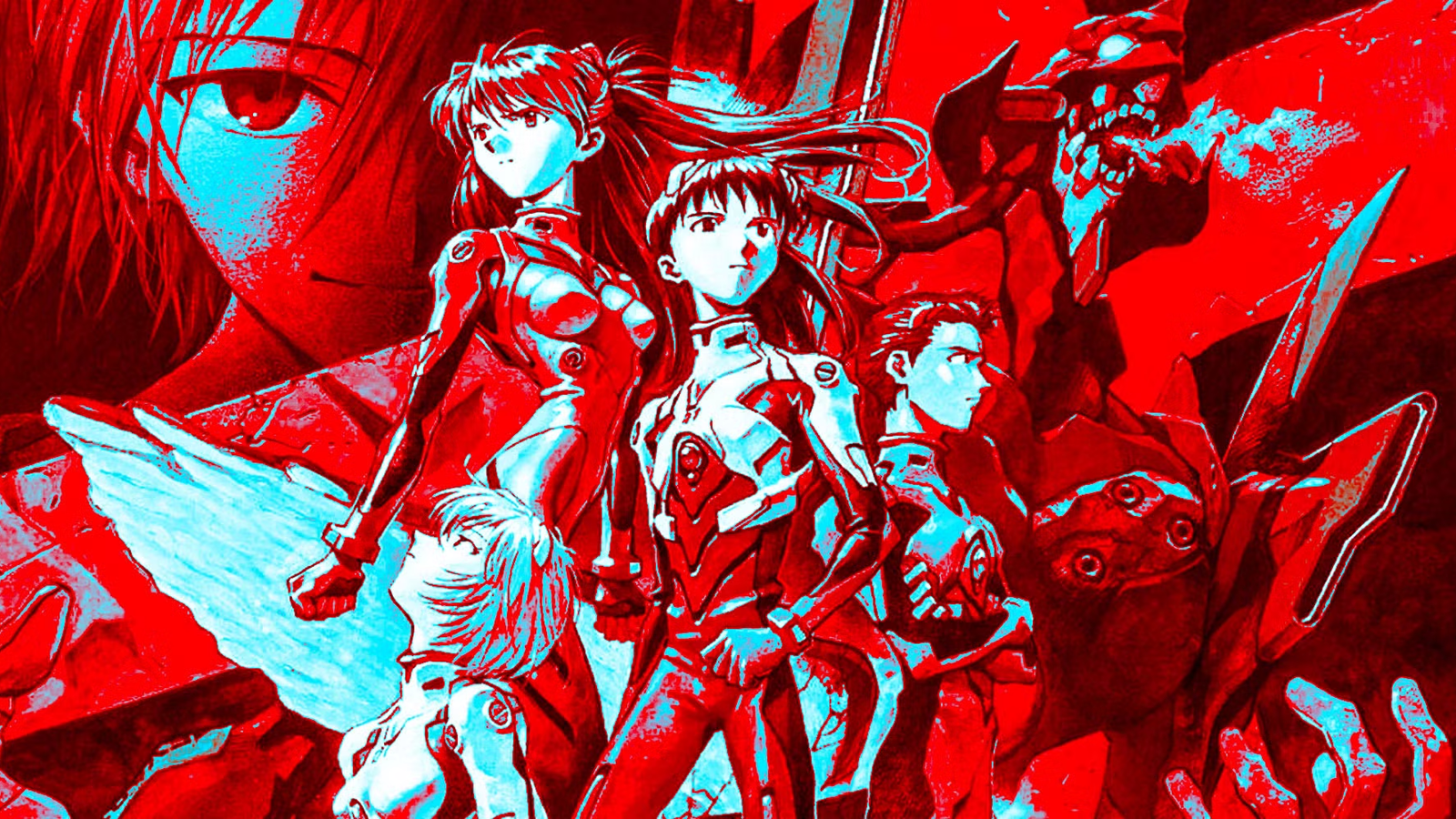
I Don’t Get Why Evangelion Is Called an Anime Masterpiece
When people talk about anime masterpieces, Neon Genesis Evangelion almost always enters the conversation. It is often cited as this revolutionary artistic milestone that redefined storytelling in anime. But after watching both the original 1995 series and its follow-up films, I can’t help but wonder what exactly makes it so special? For me, the acclaim just doesn’t line up with the experience I had watching it.
While I respect Evangelion’s place in anime history and understand why it left such a strong cultural footprint, I found myself disconnected from its story, characters, and tone. There’s a difference between something being influential and it being enjoyable or meaningful. Despite its reputation as a deep exploration of the human psyche, Evangelion felt more like a messy experiment than a masterpiece.
The Oversexualization Problem in Neon Genesis Evangelion
One of the hardest aspects of Evangelion to get past is its pervasive oversexualization of teenage characters. Asuka and Rei, two of the most important figures in the story, are constantly shown in ways that feel voyeuristic and unnecessary. Their skin-tight plug suits and lingering camera angles undermine what could have been compelling character arcs about trauma, identity, and growth.
Even worse, certain scenes cross a line from uncomfortable to outright disturbing. The infamous hospital sequence involving Shinji and an unconscious Asuka isn’t just tasteless, it’s indefensible. For a series supposedly about depression and loneliness, moments like these feel exploitative rather than insightful. Instead of empathy or reflection, I felt only discomfort and frustration.
The relationships between adults and minors in Evangelion raise serious ethical questions that the story never meaningfully addresses.
It’s not just about those isolated scenes, either. The relationships between adults and minors in Evangelion raise serious ethical questions that the story never meaningfully addresses. Misato’s interactions with Shinji, for instance, often teeter into inappropriate and pedophilic territory. The show plays with boundaries in a way that feels less like social commentary and more like shock value. It left me wondering how this content contributes to the supposed brilliance people praise.
Evangelion’s Convoluted Storytelling Did Not Have Depth
Another issue I had with Evangelion is how needlessly confusing it becomes. I understand that part of its reputation comes from its complex symbolism and psychological depth, but there’s a difference between being profound and being incomprehensible. Evangelion often mistakes ambiguity for artistry, layering vague religious iconography and cryptic dialogue without giving viewers much to hold onto.
It’s not that I dislike complex narratives. Series like Attack on Titan and 86 Eighty-Six tackle similarly weighty themes like war, identity, and existential dread, yet manage to communicate them with clarity and emotional resonance. Evangelion, by contrast, feels like it’s trying too hard to appear intellectual. Its symbolism, while fascinating in theory, rarely connects meaningfully to the characters’ actual struggles.
The last two episodes are often defended as misunderstood genius, but to me, they feel more like a byproduct of production chaos than deliberate artistry. The show’s creator, Hideaki Anno, has admitted to battling severe depression during production, which may explain the raw, fragmented storytelling. While that context makes Evangelion an interesting case study, it doesn’t automatically make it good storytelling.
There’s a fine line between deep introspection and self-indulgence, and Evangelion too often crosses into the latter.
Even The End of Evangelion, the film meant to “fix” the ending, felt more like an assault on the audience than a resolution. Its surreal imagery and disjointed pacing left me cold. I could see the ambition behind it, but ambition alone doesn’t make something meaningful. There’s a fine line between deep introspection and self-indulgence, and Evangelion too often crosses into the latter.
Neon Genesis Evangelion had Great Themes, but Poor Execution
To give Evangelion credit, it clearly aims high. It wants to dissect loneliness, trauma, and the human need for connection. The concept of teenagers piloting biomechanical giants while struggling with depression and self-worth could have been powerful. But for me, the execution misses the mark. Its emotional moments are buried beneath layers of confusion and alienation.
The characters, though interesting on paper, rarely evolve in satisfying ways. Shinji is often criticized for being passive and self-pitying, and while that’s intentional, it doesn’t make watching him any less frustrating. Asuka’s pride and vulnerability could have formed a fascinating arc, but the show often reduces her to fanservice or emotional spectacle. Rei, perhaps the most mysterious of the three, never feels fully human enough for her existential plight to resonate.
It’s ironic that Evangelion is supposed to be a character study, yet the characters themselves often feel distant. Compare that to The Promised Neverland, which explores childhood trauma and moral ambiguity through tight, focused storytelling. That series conveys the same sense of dread and existential questioning, without drowning its audience in opaque metaphors or inappropriate imagery.
Ultimately, Evangelion feels like a puzzle that was never meant to be solved. That might appeal to some viewers who enjoy digging through layers of symbolism, but for me, it was more exhausting than enlightening. I couldn’t shake the sense that the series wanted to be profound rather than actually saying something profound.
Evangelion’s Influence Does Not Equal Perfection
Of course, Evangelion deserves recognition for its historical impact. It broke boundaries for what anime could do, influencing countless series that followed. Its mix of mecha action, psychological drama, and surrealism paved the way for more experimental storytelling in the medium. Without Evangelion, we might not have gotten shows like Serial Experiments Lain or Darling in the Franxx.
But influence doesn’t always equal greatness. There are many works in film, literature, and art that changed their industries without necessarily being enjoyable or timeless. Evangelion might be one of those that was hugely influential but deeply flawed. Its importance to anime history is undeniable, but its execution leaves much to be desired.
I can appreciate what Evangelion represents without pretending it’s perfect.
I can appreciate what Evangelion represents without pretending it’s perfect. Its ambition is admirable, but ambition without coherence can’t carry a story. Many fans connect with its raw portrayal of mental illness and isolation, and that’s valid. But for those of us who couldn’t find that emotional connection, it just feels like a confusing, overhyped relic.
Maybe Evangelion is one of those series that you either “get” or you don’t. I can respect those who see beauty in its chaos, but for me, it was more frustration than fascination. Between the oversexualization, muddled storytelling, and emotional detachment, I struggled to see the genius so many people talk about.
Calling something a masterpiece implies it’s a near-perfect execution of vision and craft. Evangelion might be visionary, but perfect it is not. It’s a fascinating mess of a work that aimed for greatness and, depending on who you ask, either hit the stars or crashed and burned. I fall firmly in the latter camp, and I don’t think that’s a bad thing. Not every so-called classic will resonate with everyone, and for me, Neon Genesis Evangelion just doesn’t earn its legendary status.
- Created by
-
Hideaki Anno
- First Film
-
Neon Genesis Evangelion: Death & Rebirth
- Video Game(s)
-
Neon Genesis Evangelion
- Movie(s)
-
Neon Genesis Evangelion: Death & Rebirth, End of Evangelion, Evangelion: 1.0 You Are (Not) Alone, Evangelion: 2.0 You Can (Not) Advance, Evangelion: 3.0 You Can (Not) Redo, Evangelion: 3.0+1.0 Thrice Upon a Time
- Character(s)
-
Shinji Ikari, Rei Ayanami, Asuka Langley Soryu, Toji Suzuhara, Kaworu Nagisa, Mari Illustrious Makinami, Gendo Ikari, Misato Katsuragi