10 Underrated ’90s Anime That Pioneered Groundbreaking Ideas
The 1990s were the heyday of anime. Dragon Ball Z and Sailor Moon dominated the airwaves, making the decade their own. The VHS import boom, the conventions, and late-night TV blocks gave the impression that anime was a mainstream craze. But behind the household names lay dozens of ambitious and beautiful anime that disappeared into thin air. Some were progressive, combining experimental storytelling and art. Others were cult favorites that didn’t cross over, or got lost in the wake of bigger releases.
These days, even old-time anime fans will struggle to recall titles like Key the Metal Idol and Magic Knight Rayearth. They were excellent back in their day, packed with groundbreaking ideas and the kind of charm that only ’90s anime can manage. Whether they are mecha epics, fantasy adventures or psychological thrillers, they all played their role in the evolution of anime in minor but telling ways.
DNA² Was Sci-Fi Comedy Nobody Saw Coming
Created by Masakazu Katsura, DNA² is as bizarre as ’90s anime gets. The story follows Junta Momonari, an unfortunate high schooler with a genetic quirk: he’s destined to become a “Mega-Playboy” who will sire hundreds of children and overpopulate the future. To stop this bizarre crisis, a time traveler returns to alter his DNA, but naturally, things go awry.
DNA² mixes sci-fi, comedy and romance in a disorganized yet lovable fashion. While the anime never quite reached the level of bigger rom-coms like Love Hina, it had a quirky energy and a couple of unexpectedly emotional moments. What keeps DNA² memorable is its sheer weirdness. Sadly, while DNA² was a blast for its quirky character designs and gags, the anime fell through the cracks when other flashier anime made it into the spotlight.
One of the weirdest anime of the decade, Key the Metal Idol is a surreal combination of sci-fi and psychological drama. It is the story of Tokiko “Key” Mima, a socially awkward young girl who thinks that she is a robot. Told she will become human if she makes 30,000 friends, Key sets out on a path that soon devolves into something much more sinister than the average coming-of-age story.
What makes Key the Metal Idol stand out is its tone: quiet, unsettling and experimental, creating dread through prolonged silence and disturbing ambience. Its themes of identity and exploitation are way ahead of its time, and precede anime like Serial Experiments Lain. Unfortunately, its slow pacing and abstract storytelling kept the anime from gaining traction with mainstream audiences.
Body Horror Meets Superhero Action in The Guyver: Bio-Booster Armor
Before superhero anime got wildly popular, The Guyver: Bio-Booster Armor was already playing with graphic violence and monster battle scenes reminiscent of horror films. The series follows Sho Fukamachi, a teenage high school student who accidentally combines with the mysterious Guyver Unit, transforming him into a monstrous yet powerful biomechanical warrior. With his newfound abilities, Sho is the last line of defense against the nefarious Chronos Corporation and their army of mutant Zoanoids.
In Guyver, the transformations are violent, and the fights are bloody. Guyver was ’90s cult material, thanks in large part to its OVA, but the series never gained mainstream popularity. Overshadowed by flashier mecha anime and more accessible shōnen anime, Guyver became one of those hidden anime that only hardcore fans still talk about today.
Those Who Hunt Elves Is a Fantasy Comedy With a Chaotic Twist
Not every forgotten ’90s gem was heavy or experimental. Those Who Hunt Elves was pure chaos wrapped in fantasy comedy. The series follows three eccentric humans transported into a fantasy world: a tank driver, a martial artist and an actress. Their mission is to find spell fragments tattooed on elves’ bodies. That unfortunately means undressing elves wherever they’re headed, leading to a great deal of comedy.
The idea is ridiculous, but that’s part of the fun. With its mix of road-trip comedy and over-the-top antics, Those Who Hunt Elves carved out a small cult following in the ’90s. However, the anime never caught on internationally, so it was forgotten when fantasy anime moved on to either darker or more serious fare. Today, Those Who Hunt Elves is evidence of how wild and unstable ’90s anime comedy was.
Top Gun Meets Sci-Fi Opera in Macross Plus
For fans of stunning animation and epic music, Macross Plus is a hidden treasure. Released as a four-part OVA and later as a film, it combines high-flying mecha battles with a deeply human love triangle. Two rival test pilots compete against each other to create the next generation of shape-shifting fighter jets, and overcome their checkered past with a shared childhood friend. The series is a mix of romance, action and cyberpunk.
The series is legendary among diehard anime fans for its beautiful imagery and its unforgettable theme. Even with all that, it’s often underrated outside Macross fans. Overshadowed by Macross Frontier in the 2000s and other space operas of the decade, Macross Plus is owed much more credit as one of the most stylish and emotional anime of the ’90s.
The Vision of Escaflowne Offers Romance, Mecha and Fantasy in One Ambitious Package
When it debuted in 1996, The Vision of Escaflowne seemed destined to be a classic. The story consists of mecha battles and shojo-style romantic elements to tell the story of Haruka, a high school girl who is transported into the war-torn world of Gaea. There, she meets the prince Van and gets pulled into a battle concerning ancient prophecies and the mecha Escaflowne.
Few ’90s anime attempted to balance so many genres at once, and fewer with such stunning artwork and sweeping scores. The anime offered drama along with epic, gear-grinding combat, and explored ideas about fate and love. Still, it did not find lasting fame like Evangelion or Cowboy Bebop. For fans today who watch it, Escaflowne is a hidden gem of the ’90s.
Magic Knight Rayearth Is a Shojo Anime Adventure With a Dark Twist
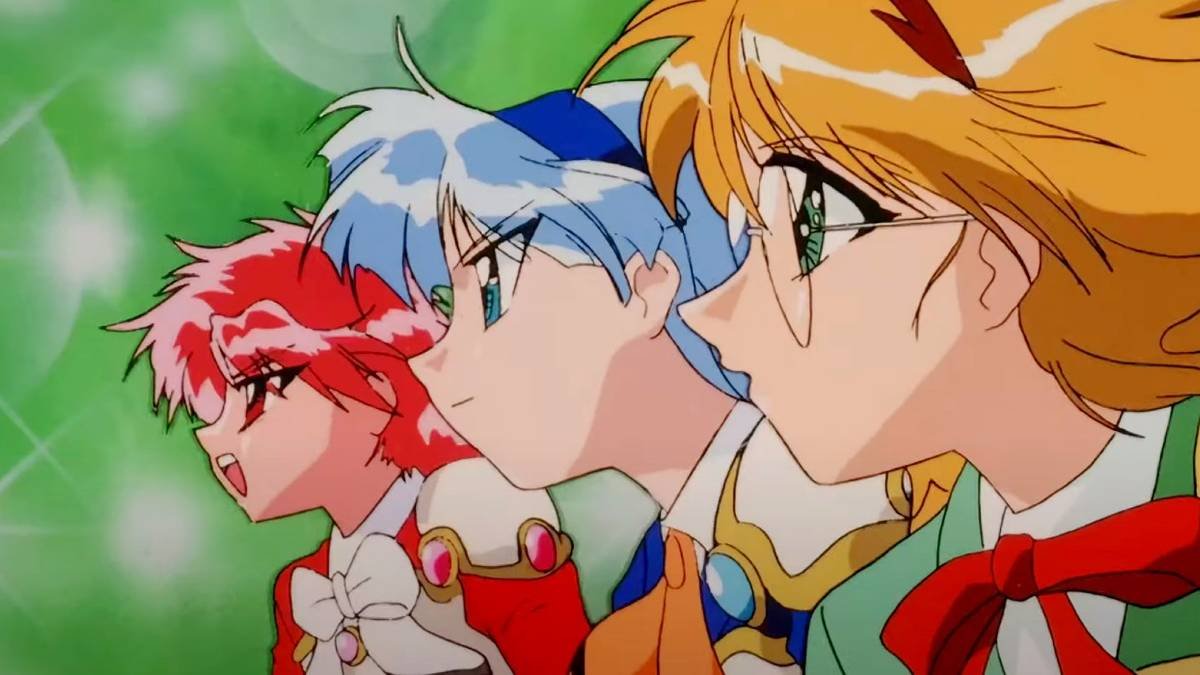
When most people think of CLAMP, the all-female manga organization, they think of Cardcaptor Sakura or X/1999. However, in the mid-90s, Magic Knight Rayearth became a bold combination of magical girl elements and epic fantasy. Three high school girls are transported into a realm of magic and gigantic mecha. To save the world of Cephiro, they have to balance lighthearted friendship moments with surprisingly dark themes of betrayal and sacrifice.
Rayearth was distinctive for its colorful art style, adding richness to CLAMP’s clean designs, with lots of detail. The anime even spawned two TV seasons and an OVA. Its crossover of shojo sentimentality with shōnen fights was forward-thinking for its time. Although Rayearth opened the door to genre-bending fantasy, it’s often forgotten in the shadow of later isekai anime and magical girl hits.
Before Evangelion, There Was Nadia: The Secret of Blue Water
Before Neon Genesis Evangelion defined a generation, acclaimed director Hideaki Anno had already made Nadia: The Secret of Blue Water, which was loosely inspired by Jules Verne’s 20,000 Leagues Under the Sea. The anime follows a circus performer named Nadia, with a mysterious past, and Jean, a young inventor, whose adventures take them around the world and tie them into the fight against the evil Neo-Atlanteans.
The series combines romance and steampunk aesthetics, with surprisingly dark turns relating to war and the cruelty of man. Though it did well commercially in Japan, and even received a television broadcast abroad, Nadia has largely been forgotten. Its mix of charming characters and historical fantasy makes it one of the most unsung gems of the ’90s. Fans of Evangelion will find many thematic seeds planted here.
Record of Lodoss War Is the Grandfather of Fantasy Anime
Before anime like Sword Art Online and Re:Zero brought fantasy to mainstream attention, Record of Lodoss War laid the foundation. Inspired by a collection of transcripts from Dungeons & Dragons campaigns, this OVA turned into an extravagant high fantasy epic. The story begins when a novice swordsman named Parn goes on a harrowing adventure to save the island of Lodoss from evil.
Lodoss War was dedicated to epic worldbuilding. Every battle felt like a tabletop RPG session. Its highly detailed artwork, eerie score and wide scope drew fans in the early ’90s. But as the fantasy genre broke big with flashier, more action-packed titles, Lodoss War fell onto the niche shelf. Still, the series is a cornerstone for those who want to see where anime fantasy originally broke ground.
Now and Then, Here and There Is a War Story Too Painful to Remember
At first, Now and Then, Here and There was a pretty typical isekai anime, with cheerful hero Shu being transported to a distant world. But things rapidly got scary. Shu found himself in a post-apocalyptic wasteland ruled by a dictator who enslaved children and murdered hope itself. Torture, starvation and child soldiers were some of the subjects that rendered it one of the darkest anime of the decade.
Although Now and Then, Here and There gained critical success for its unflinching portrayal of war and the cruelty of humanity, the anime was simply too bleak to achieve mainstream success. Followers who were willing to endure its desolate story called it unforgettable, but the anime has sadly slipped into obscurity since. Now and Then, Here and There is a haunting piece that proved anime could do anything when it came to emotional storytelling.