
10 Harsh Realities Of Rewatching Any Anime From The 1990s
Any anime fan can enjoy the industry’s latest offerings with everyone else, with titles like Demon Slayer and Attack on Titan being some of the biggest recent hits. Anime fans might also go back to the 2010s or even the 2000s to revisit some old favorites or explore classics out of curiosity, and fans might go even further, and visit the realm of 1990s anime. There’s something to be gained by exploring this era of the anime industry, but there are some pitfalls to watch out for, too.
The 1990s have plenty to offer for fans looking for fantastic classics to watch, such as Slam Dunk and Neon Genesis Evangelion, but it’s not all fun and games. Anime fans must be ready to deal with a number of harsh realities of revisiting the 1990s, some of which may be minor annoyances for devoted fans, while others might be a dealbreaker for more casual fans. Either way, it’s good for someone to know what they’re getting themselves into.
The 1990s Had a Lot of Bad or Forgettable Anime to Wade Through
Quality-wise, the 1990s is all over the place as a major decade for anime. Some titles from the era were undeniably excellent, such as ’90s classics like Trigun and Dragon Ball Z, but it also had a lot of weak titles. The decade also had some borderline series like Tokyo Mew Mew, and fans may be unsure whether to spend a decent amount of time on them or not.
Today’s anime fandom knows relatively little about the decade’s offerings, so anyone exploring 1990s anime may have to take the time to filter the good from the bad. Today’s classics are well known, but sorting the good from the chaff in the 1990s will take some research or trial and error, and some viewers may not be up to that. It may rarely be obvious at a glance which ’90s anime is a gem and which is a dud.
1990s Anime Often Use Filler Episodes
In the 2020s, anime fans hardly ever have to worry about filler episodes or arcs, but in previous decades, filler was common. Anime from the 1990s and 2000s used filler to keep an anime on the air without fully catching up to the manga, and today’s viewers have to pay the price for it. Filler is often undesirable, and when exploring old anime, it may be tough to tell the filler apart from the canon material.
By contrast, today’s anime simply take themselves off the air while waiting for more material to adapt, such as with Jujutsu Kaisen and Demon Slayer. This approach works just fine in the era of streaming, but in the days of TV, studios wanted to keep their series on the air as much as possible, so they made use of filler content. Even the legends of the time, such as Dragon Ball Z, made use of it.
1990s Anime May Be Rooted in a Bygone Zeitgeist or Social Context
One of the more minor downsides of revisiting previous decades is the fact that most works of fiction are a product of their time, including the social context and zeitgeist. On the upside, watching 1990s anime can give fans a sense of what daily life and society were like back then, making old anime feel like a time capsule.
On the downside, this means any 1990s anime simply won’t hit the same way it was meant to in its heyday. ’90s anime were designed for contemporary audiences, who will subtly but strongly “feel” the anime as a part of their era. This may reflect in anything from discussions of current events to characters in 1990s anime marveling at simple smartphones or praising their desktop PCs, with no smartphones in sight.
Nostalgia May Disappoint Some Fans of 1990s Anime
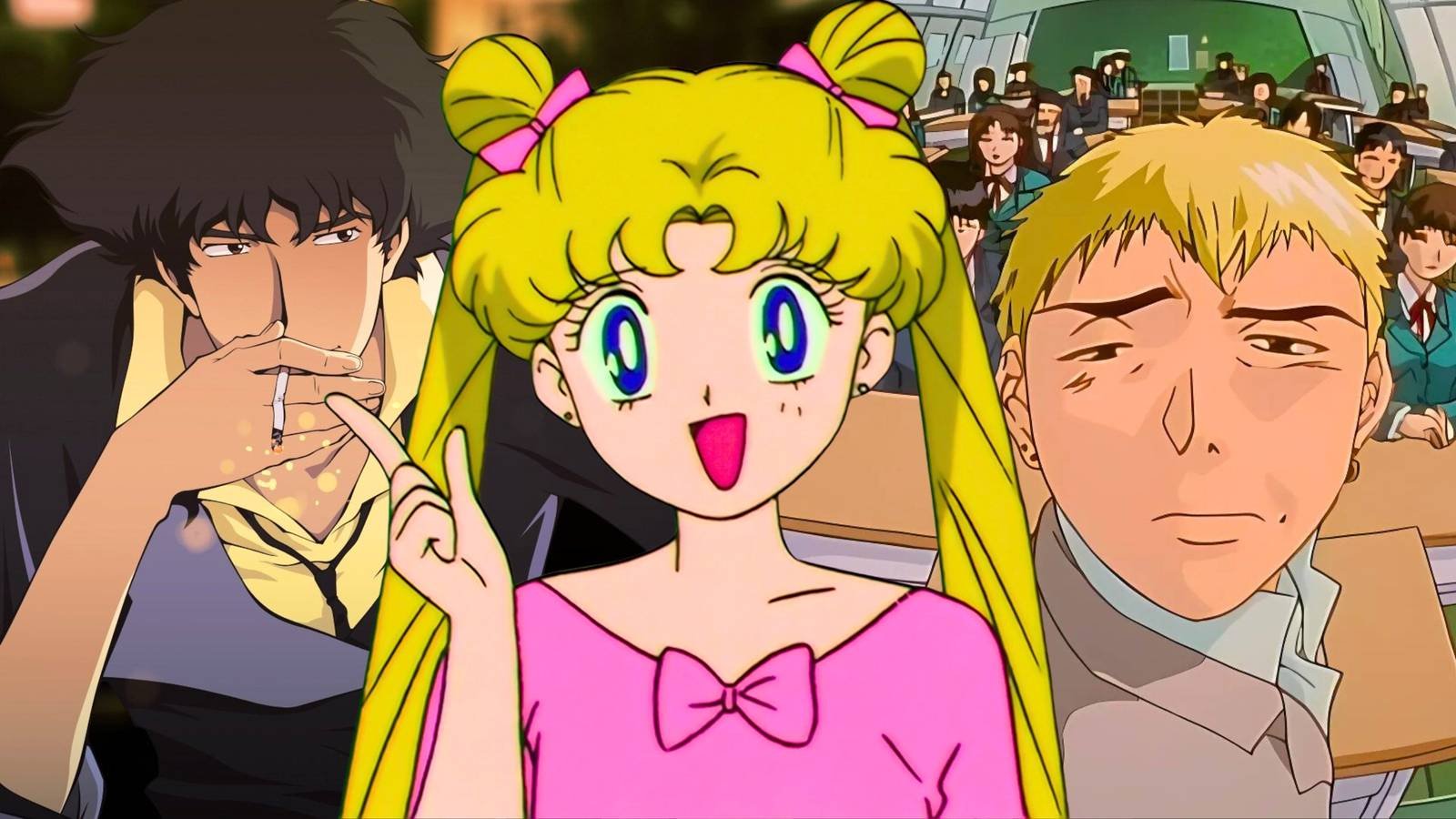
Nostalgia is a tricky thing when revisiting movies, TV shows, comics, and musical albums from previous decades. In some cases, anime nostalgia can hit hard with titles like Cowboy Bebop and Great Teacher Onizuka, but it can also be misleading. Older anime fans may have fond memories of their favorite ’90s titles, but that nostalgia may be lying to them with rose-tinted glasses.
Some ’90s anime will no doubt disappoint fans when it’s time for a blast from the past, with any number of factors making a ’90s anime feel weak or unfamiliar in some ways. One example is the original Pokémon movie, which thrilled young Millennial viewers of the time, but doesn’t hold up so well on a rewatch. Fans may like Mewtwo’s dialogue in hindsight, but they won’t like how the movie tripped over its own feet in most other regards.
The Fandom for ’90s Anime Is Relatively Small
One of many minor but very real downsides of immersing oneself in 1990s anime is the modest fanbase for such things. If anime fans look hard online, they will meet other fans of ’90s anime who remember the good old days, but fans of modern anime don’t even have to bother. Anyone keeping up with today’s anime like Chainsaw Man and Demon Slayer can find countless social media posts, fan projects, and other online discussions with ease.
By contrast, 1990s anime has a smaller fanbase online, and that means novice anime fans won’t find a lot of support for finding good titles to watch. It also means anyone who loves using social media to express their love of anime will have a disappointingly small audience for their comments on older anime. Anyone can get a lot of attention tweeting about My Hero Academia, but not so much for Slam Dunk.
The production values in 1990s anime may let down today’s viewers in several ways, including the usage of recycled footage. Anime studios often had a tight budget for making anime in the 1990s given Japan’s economic hardships at the time, so any anime from that decade is liable to keep recycling certain scenes or animations.
Fans of the time might or might not have minded that, but modern anime fans will find it distracting and annoying, not to mention how it looks as cheap as it actually is. It may even feel as though an anime episode is stalling for time by reusing footage like that. Today’s anime don’t do that nearly as often, certainly not well-produced action titles like Jujutsu Kaisen and Kaiju No. 8.
Older Anime May Have a Bad or Absent English Dub
The topic of English dubs isn’t a serious concern for everyone in the anime community, since plenty of viewers vastly prefer the original Japanese dub and may ignore all foreign dubs. That being said, there’s a decent market for dubbed anime, including in English, and some anime deliver more than others. Even the 1990s had good dubs like that of Cowboy Bebop and decent ones for titles like Dragon Ball Z.
However, many other 1990s anime either have no English dub or an iffy or downright bad one. After all, anime wasn’t nearly as global back then, so less time, money, and effort went into English dubs or other dubs. As for today’s anime, some series will release an episode’s English dub at nearly the same time as the original Japanese, a benefit no fan of 1990s anime will enjoy.
1990s Anime Are Poorly Represented on Streaming Platforms
The good news is that many of the must-watch anime from the 1990s are present on streaming platforms like Netflix, Crunchyroll, and HIDIVE. Fans can try out the likes of Trigun and Sailor Moon whenever they like, but the most devoted fans of 1990s anime know that this is just scratching the surface. As a whole, the decade is a weak representation on most streaming platforms.
At most, streamers are just getting a highlight reel of the 1990s in anime, while hundreds of other titles are simply not there. Of course, if the ’90s is only going to be sparsely represented, it might as well be with the best and most familiar anime, but it’s still a shame today’s streamers can’t get the full picture of what the 1990s offered. Even with the benefit of DVDs, fans may have a tough time finding as much content as they want.
1990s Anime Tend to Use Outdated or Problematic Tropes
Tropes come and go in anime, and they sometimes stay the same for decades on end. This works well with the likes of the tournament trope, with modern fans able to appreciate what they see in Yu Yu Hakusho‘s Dark Tournament Arc. The downside is when today’s anime fans run into outdated or problematic tropes that come up often in 1990s and 1980s anime.
Fans may see a lot of violent tsunderes, for example, such as Akane Tendo in Ranma 1/2, or a great number of mega-pervert characters like Master Roshi. Some anime fans may find this funny, but others will be hugely turned off and may feel glad that today’s anime landscape is phasing out these troubling tropes.
Older Anime Have Non-HD Visuals and Lower Production Values
An unavoidable downside of watching anime from earlier decades is the lower production values. Some anime, such as Cowboy Bebop and Neon Genesis Evangelion, made the most of the era’s production techniques and still look fairly good today, but that’s not true for all 1990s anime. For one thing, nothing whatsoever was in HD back then, which is a bummer for modern fans who are 100% used to HD visuals.
Older anime from the 1990s and 1980s may also have less movement, reducing some scenes to colored manga panels where a speaker moves their mouth and nothing else. Anime from the 1990s didn’t have good CGI or 3-D visuals, and for that matter, CGI is iffy even in today’s anime. Some anime can get away with it, such as Demon Slayer, but it wasn’t a strong option for anyone in the ’90s.