
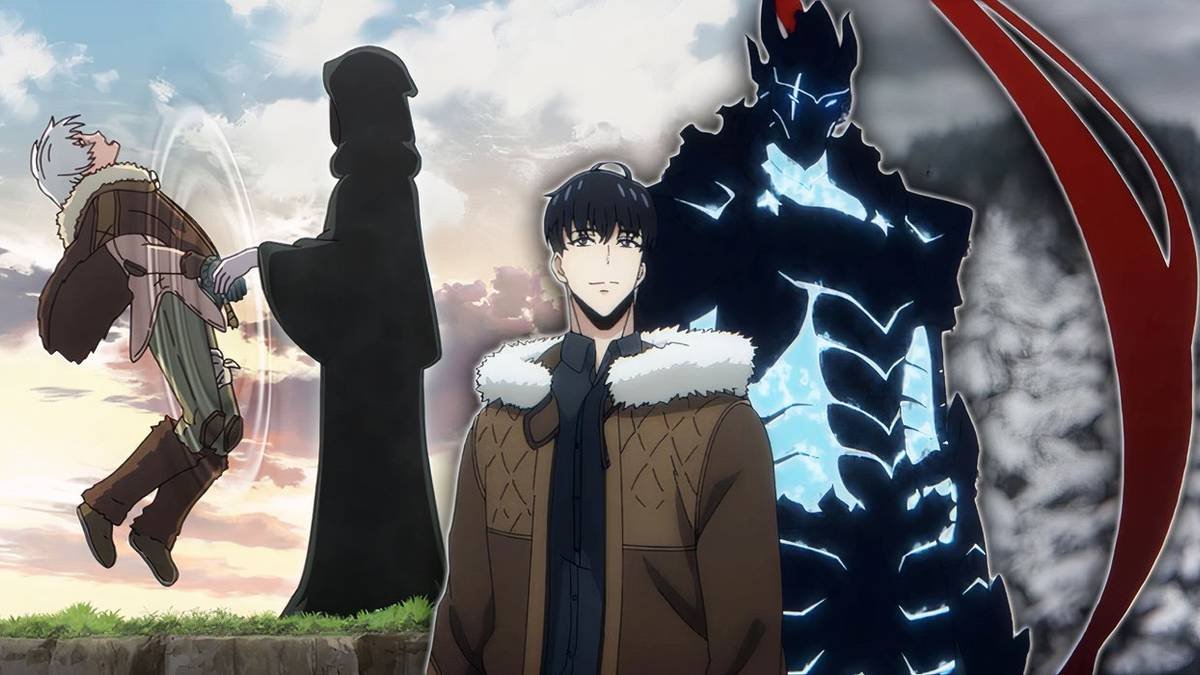
Crunchyroll Is Now Streaming the Best Fantasy Anime of 2025 — & It’s Not Solo Leveling
The fantasy anime genre has rarely looked as big or as crowded as it does in 2025. Between slick new adaptations and dark reimaginings of the genre, every season feels like a battle for the next “it” show. Naturally, Solo Leveling has dominated much of that conversation for the last 2 years. Solo Leveling has cinematic action, god-tier animated visuals, and a video-game-style pacing that makes it an easy measuring stick for modern fantasy. However, under all that spectacle, something quieter and much deeper is available to viewers on Crunchyroll. To Your Eternity has returned for its third season, and it’s quietly creating a case for being the most emotionally ambitious fantasy anime of 2025.
Solo Leveling leans into power fantasies with its straightforward progression, while To Your Eternity leans into loss, memory and the strange persistence of life itself. Created by Yoshitoki Oima, known for A Silent Voice, the anime takes away the fast-paced leveling system for one that requires viewers to slow down and think. To Your Eternity follows Fushi, an immortal being who experiences pain and love over centuries on his path to achieving humanity. Each season remakes the understanding of the world around that central idea, using fantasy as an existential exploration, rather than escapism. While other stories in the fantasy genre rely on fancy spectacle, To Your Eternity focuses on survival. With To Your Eternity Season 3 streaming as of October, this series has quietly become a revolutionary success.
To Your Eternity Transcends Fantasy Tropes
To Your Eternity doesn’t play by the usual fantasy rules. There’s no kingdom to save, no final boss to defeat, and no clear power ceiling. The story instead builds itself around one evolving question: what does it mean to live forever when everything else fades? That question defines Fushi’s journey, and it’s what keeps the series distinct in a landscape obsessed with leveling systems and rank charts. Fushi begins as a shapeless orb, created by an unseen “Beholder” and cast into the mortal world. From there, he learns through imitation, first becoming a wolf, then a boy, and eventually, something resembling a person.
Each form he takes comes from someone he’s lost. Every death imprints a new piece of identity onto him, and that process turns immortality into tragedy. The show builds on this foundation with haunting intimacy. Now in its third season, To Your Eternity has entered modern-day civilization, centuries after its earlier arcs of grief, rebirth, and the long war against the Nokkers. This latest setting in To Your Eternity is almost disorienting, with technology and an entire society built atop the legends of a being that has outlived everyone he’s ever loved. To Your Eternity transforms fantasy into something heartbreaking and painfully reflective.
This is a rare fantasy story that treats eternity not as a gift but as an emotional experiment that measures how long hope can survive repetition. What makes To Your Eternity transcend its genre is how the anime treats emotion as worldbuilding. The landscapes shift with memory, and the people change, but their echoes remain through Fushi’s transformations. Unlike most fantasy series targeting shonen anime audiences, where emotion fuels strength, emotion is the source of strength. Each bond becomes another reason to continue existing. That delicate, mournful tone is precisely what sets To Your Eternity apart from other fantasy blockbusters of the year.
The Story Intimately Explores the Loneliness of Immortality
Immortality has always been a staple of fantasy storytelling, but To Your Eternity treats it like a slow-burning curse. Fushi’s endless life is defined by loss: losing and loving the mortals around him while always watching. The anime continues to unpack that loneliness in devastating ways in To Your Eternity Season 3. Fushi has been battling monstrous Nokkers for two seasons, seeing countless companions die, and slowly starting to process humanity one heartbreak at a time. With the absence of Nokkers and the presence of a flourishing new civilization, Fushi is a god in a world that doesn’t need saving anymore. What was once a way to preserve life becomes a reminder of all the life lost.
While earlier To Your Eternity arcs dealt with his emotional awakening, the current plot deals with how memory itself becomes unbearable. Fushi remembers every friend he’s buried, every home he’s outlived, and every lesson time has eroded. That boundless accumulation of memory transforms him into a hero and also a ghost. The beauty of To Your Eternity is that Fushi does not succumb to hopelessness, despite the world’s cruelty. The act of remembrance becomes To Your Eternity’s central magic system. Where most fantasy heroes channel energy through swords or spells, Fushi channels memory. Fushi’s transformation into the people he’s lost becomes a literal act of resurrection.
To Your Eternity Season 3 intensifies this theme by reuniting Fushi with the descendant of a character who once shaped him. The world keeps moving, but Fushi remains constant, forced to rebuild meaning in every new era. This approach gives To Your Eternity a rare sense of emotional realism, especially for an anime. To Your Eternity imagines a world where immortality doesn’t solve the human condition but magnifies it. Every miracle has a cost, and every bond carries an expiration date. By treating immortality as a lens rather than an escape, Fushi’s journey captures something that other fantasy anime rarely attempt.
Why To Your Eternity’s Worldbuilding Outclasses Its Rivals
At first glance, making a comparison between To Your Eternity and a show like Solo Leveling feels unfair. But in 2025, that contrast is precisely what makes To Your Eternity so vital. Solo Leveling is fantasy maximized to its most thrilling and kinetic: ramping stakes, style and power with every episode. On the other hand, To Your Eternity operates at fantasy’s most haunting and contemplative. Most fantasy anime operate by expanding outward with more kingdoms, bigger maps and higher stakes. To Your Eternity does the opposite. Its world feels intimate, even when it spans generations. Each new society and religion evolves naturally from what came before, often shaped by the traces Fushi leaves behind.
This long view of civilization is where the series quietly outclasses most of its contemporaries. It treats worldbuilding not as geography but as genealogy, and To Your Eternity Season 3 demonstrates this beautifully. It’s been hundreds of years since the earliest events, and yet, the civilizations thriving under Fushi’s influence still faintly recall his first companions. They preserve remnants of forgotten times through their customs and languages. They are gentle reminders that while people may not remember, time will remember. This produces a living timeline, a fantasy world that feels old and damaged, but very real. To Your Eternity’s worldbuilding allows viewers to feel the sediment of centuries.
The emotional archaeology gives To Your Eternity a sense of scale that even the most visually extravagant anime can’t replicate. More than that, the world itself becomes a character. Fushi’s influence on civilization mirrors how memory shapes identity. Even when he withdraws, humanity continues to build upon his impact, whether it’s idealizing him or misunderstanding him. This tension between legend and truth becomes the anime’s commentary on storytelling itself. History, like immortality, is a form of distortion. In a medium that often treats fantasy as escapism, To Your Eternity turns it into a reflection to show how myths are sometimes born from someone’s tragedy.
To Your Eternity Is 2025’s Best Fantasy Anime
To Your Eternity stands apart because the anime understands that fantasy doesn’t need to be loud to be powerful. Its emotional scope is vast precisely because it’s quiet. Every episode of To Your Eternity unfolds like a memory being retold, filled with moments that linger rather than explode. In a year where shows like Solo Leveling dominate with kinetic energy, To Your Eternity builds tension through silence and the small gestures that define humanity more than any battle ever could. The story refines this emotional language to perfection.
To Your Eternity doesn’t need to compete visually because its weight comes from meaning. Every image resonates like an afterthought that refuses to fade. Grief is the story’s language, but it never feels hopeless. To Your Eternity treats pain as continuity, proof that love once existed. In that way, To Your Eternity redefines fantasy, using immortality and the absence of death as an act of emotional preservation. The monsters may change, and the wars may end, but what survives are the echoes of connection.
Few anime in 2025 capture that idea so consistently. By the time Season 3 reaches its midpoint, To Your Eternity will feel less like a story and more like a meditation on living, remembering and rebuilding. Fantasy doesn’t have to promise escape; it can promise understanding. To Your Eternity represents what happens when a story dares to evolve beyond its premise, choosing introspection over intensity. In a landscape crowded with spectacle, this quiet, heartbreaking masterpiece reminds the genre of what it’s capable of.