5 Best-Written Horror Anime You Can Binge All Of This Weekend
Anime is such a universally acclaimed storytelling medium because it caters to so many diverse genres and sensibilities, with it being especially effective when it comes to horror. Anime has exhibited a fascination with horror as early as the ‘70s, and it’s celebrated the genre far more than even Western animation has. Fans have their share of options when it comes to horror anime, from psychological thrillers to aggressive monster movies and body horror epics.
Although anime isn’t exempt from long-running horror series, several of the best horror anime condense their greatness into a small batch of episodes that’s easy to binge-watch during a weekend. There are some really well-written and beautifully animated series that will make horror fans scream, not just because they’re scary, but because they binged through the whole thing too quickly.
5
Paranoia Agent is a Dark Warning About the Power of Mob Mentality
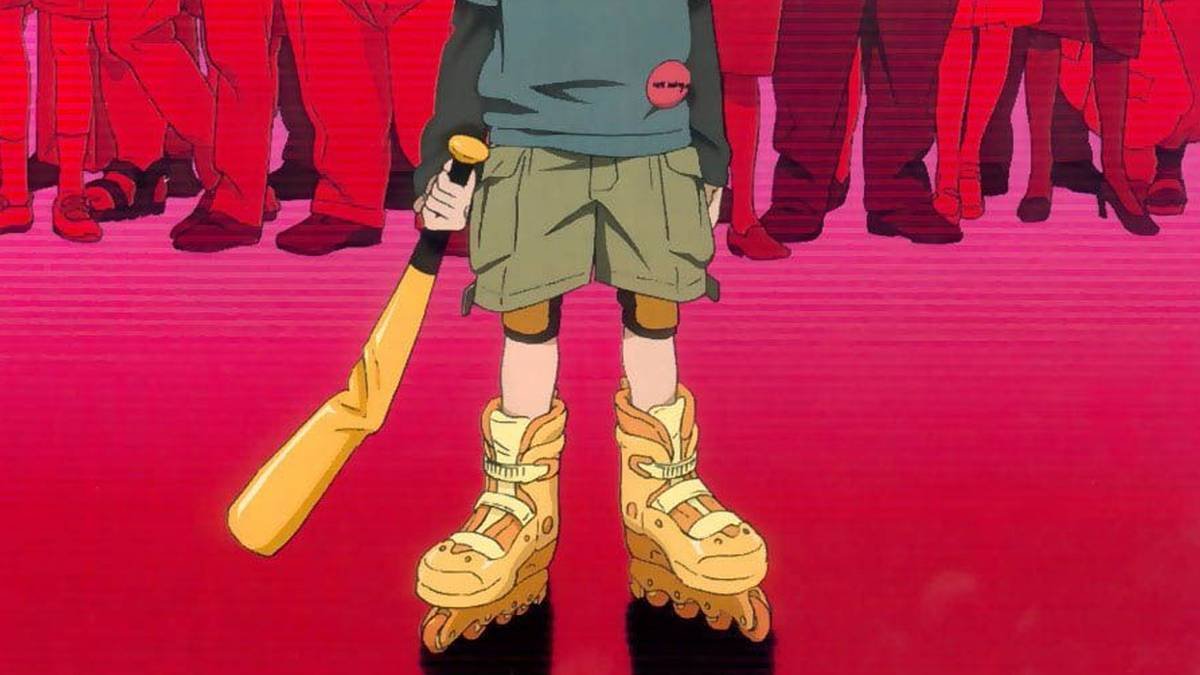
Satoshi Kon was one of anime’s most promising storytellers before his untimely death in 2010, cutting his prolific run short. Kon’s greatest accomplishments are largely in cinema, including his work on Perfect Blue, Tokyo Godfathers, Millennium Actress, and Paprika, but Paranoia Agent is a 13-episode tour de force exercise that beautifully translates Kon’s skills to serialized, episodic storytelling. Paranoia Agent attempts to unlock the mystery around Shonen Bat, an armed assailant who has attacked a number of residents from a small Tokyo community. Paranoia Agent is an excellent analysis of social phenomena, mob mentality, and the idea of tulpas that can manifest and draw power from thoughts and beliefs.
Kon takes advantage of the episodic nature of television so that each installment focuses on a different victim who chronicles their experience with Shonen Bat, all of which depict a radically different enemy. This is such a smart, powerful way to get into the heads of these characters and highlight how the kernel of an idea can transform through groupthink like a game of broken telephone. Paranoia Agent is genuinely unnerving and an unflinching look at humanity’s depraved nature. At the same time, it’s also such a stunning character study that shines a light on a dozen different personalities who are all screaming out in pain.
Paranoia Agent is a completely manageable weekend binge at 13 episodes. However, it crafts such a compelling mystery that audiences won’t struggle to fly through episodes and finish it faster than expected. Paranoia Agent’s haunting strengths make it even more heartbreaking that Satoshi Kon couldn’t tackle another anime series, whether it was psychological horror or something completely different.
4
Elfen Lied Subverts Expectations By Making Mankind the Villain
Anime has an incredible ability to subvert expectations and actively lead its audience down the wrong path through deceptive visuals. This approach can be remarkably effective with horror series that almost lull its audience into a false sense of security through innocuous visuals that are suddenly undercut by harrowing subject matter. This is particularly successful in series like Higurashi: When They Cry and Made in Abyss, but it’s also effectively weaponized in the 13-episode Elfen Lied.
Elfen Lied tells a story that’s intentionally familiar, only to push its characters into dark, disturbing places. Two kind-hearted cousins, Kouta and Yuka, find an amnesiac alien named Lucy. Kouta and Yuka attempt to protect Lucy and help her reclaim her memories, only for Lucy to be hunted down by a determined government agency that wants to manipulate and control Lucy’s powers. Lucy, as a Diclonius alien, has deadly psychic powers that become a serious point of contention.
Elfen Lied creates compelling horror as Lucy loses control of herself and a second personality fractures and comes to the forefront. Elfen Lied riffs on many basic sci-fi and horror archetypes, but this story is anything but predictable. There’s a harsh edge to Elfen Lied that leads to a brutal conclusion that reinforces the idea that mankind may be the worst monster of all. Elfen Lied is a scathing indictment of the world that hides behind slice-of-life innocence before it trades in gruesome body horror.
3
Devilman Crybaby Unleashes an Epic Demon Apocalypse
Go Nagai is a true anime visionary who is responsible for iconic properties like Cutie Honey, Mazinger Z, Violence Jack, and Devilman, the latter of which has been around for over 50 years and spawned multiple spin-offs and continuations. 2018’s Devilman Crybaby essentially repeats the broader strokes of Nagai’s original Devilman series, but filters it through the kaleidoscopic visual mayhem that’s become the signature trademark of Masaaki Yuasa and Science Saru studio.
Devilman Crybaby chronicles Akira’s rude awakening as he realizes that he possesses the power to become the deadly Devilman — a monster who fights with the power of a demon, but the soul of a human. Akira seeks to use his Devilman power to take on other demons, rather than contribute to a potential demon apocalypse. All the while, Akira’s best friend, Ryo, takes on the role of both angel and devil on Akira’s shoulders. Devilman Crybaby turns into a gripping struggle for Akira’s soul that plays out on a truly epic scale with unreal visuals that push the animation to its limits.
Devilman Crybaby’s premiere begins with an unparalleled spectacle of carnage that feels reminiscent of the unrestrained demon gore that was prevalent in ’80s titles like Wicked City and Demon City Shinjuku. Devilman Crybaby makes sure to conclude with just as extreme of a sequence. Devilman Crybaby doesn’t hold back across these ten episodes and manages to create a moving story that’s rich in ultra-violent action, but also a tender love story and coming-of-age drama. Devilman Crybaby effortlessly mixes the intimate and personal with universal, maximalist destruction.
2
Another is a Compelling Murder Mystery With a Perfect Plot Twist
There are some absolutely phenomenal anime that put overwhelmed children in charge of solving debilitating mysteries. It’s an effective way to create tension and ramp up stakes, especially when these mysteries have lives on the line. 2012’s Another is a sterling example of a horror anime that does exactly what it needs in such a tight, economical timeframe of 12 episodes. Another is based on a novel of the same name, which is likely why there’s such a strong narrative foundation to the story that doesn’t crumble under its own weight or suffer many of the standard horror anime pitfalls.
Another focuses on Koichi Sakakibara who transfers to a new middle school that is evidently plagued by a cruel curse that’s led to the deaths of many of his student peers. Koichi bonds with a mysterious girl with an eye patch, Mei Misaki, who nobody else seems to notice. Koichi and Mei are a captivating team and each Another episode offers up something rewarding about the foreboding mystery at hand.
Another is also set in 1998, which turns it into a nostalgic blast to the past that juxtaposes simple creature comforts with disturbing setpieces. Another‘s answers don’t disappoint and it’s an anime that gets great use out of the extra OVA installment, which in this case becomes a rewarding opportunity to turn the clock backwards and fill in the story from the opposite perspective. Another sticks the landing in a dozen episodes and is still one of the best horror anime that’s set in a school.
1
Mononoke Blends Supernatural Mysteries With Dazzling Visuals
2007’s Mononoke is the best horror anime that slips through the cracks and doesn’t get the love that it deserves. Mononoke is technically a spin-off of the anthology series, Ayakashi: Samurai Horror Tales, and adopts an anthology-like structure to its storytelling. Each Mononoke episode doesn’t completely reset the slate and features a whole new cast. Instead, every entry follows a traveling merchant — known only as the Medicine Seller — who inadvertently finds himself in the middle of supernatural predicaments. This is a solid formula that never grows old and lends itself to a wide range of paranormal problems. It also doesn’t hurt that the series is scripted by Chiaki J. Konaka, the acclaimed writer responsible for Serial Experiments Lain and Digimon Tamers.
Mononoke’s Medicine Seller is the perfect enigmatic protagonist to string the storytelling along. Mononoke engages with actual Japanese history and real urban legends and folklore that involve ayakashi — unnatural spirits — that leave the audience as informed as they are entertained. On top of this captivating storytelling, Mononoke comes to life with truly remarkable visuals that feel like Japanese paintings that have come to life. It’s easily some of Toei’s most visually impressive work. It’s very easy to barrel through Mononoke‘s dozen episodes in a weekend.
Mononoke has recently extended itself through a trilogy of Netflix movies, the last of which is set to release in 2026. Mononoke is still a manageable binge for those who want to add its two movies, Phantom in the Rain and The Ashes of Rage into the mix, too. They’re epic escalations that help conclude Mononoke on bigger and braver notes. Fans of Mononoke should also check out Mushishi, a supernaturally-charged anthology-esque anime that’s cut from the same cloth. However, with two seasons of over 20 episodes apiece, Mushishi isn’t as binge-friendly as Mononoke.