The 10 Saddest Anime Series of All Time
Anime has a way of sneaking up on you. From sweeping fantasies to slice-of-life comedies, the medium knows how to linger in your memory. Some titles like Naruto, Attack on Titan, and Spirited Away have become so synonymous with culture that they are forever etched into conversation. But then there’s the breed of sad anime. The ones that wreck you. These are stories that hit where it hurts and make it beautiful without being epic or flashy.
Sad anime is not a genre, it’s a mood. A vibe, a gut feeling, a slow burn that snowballs into a total collapse. Some sad anime are quiet tearjerkers, built around loss, memory, and the ache of growing up. Others are brutal, existential sucker-punches that leave you staring at the wall in silence. They know exactly how to break your heart, and they do it with style, grace, and sometimes a brilliant soundtrack that makes it worse (in the best way).
Here are the 10 saddest anime of all time.
‘Orange’ (2016)
Naho Takamiya’s quiet high school life is upended when she receives a letter from her future self (ten years ahead) urging her to avoid the biggest regret of her life – the death of her classmate Kakeru Naruse. The letter outlines specific moments where Naho must act differently to help Kakeru, who is silently battling grief. As Kakeru transfers into her class, Naho and her close-knit group of friends notice cracks in his cheerful facade, but they try to rewrite the future regardless.
It’s About Intervention and Empathy
Blending romance, sci-fi, and slice-of-life with a gentle urgency, Orange is an anime that makes every small decision feel monumental. It treats the heartbreakingly inevitable future with tenderness and realism, with the soft pacing mirroring the fragility of adolescence. Kakeru’s internal struggle is never dramatized, but the subtle shifts in her demeanor, the missed chances, and the group’s unwavering support are elements that hit hardest.
‘Angel Beats!’ (2010)
In Angel Beats!, Yuzuru Otonashi wakes up in a high school that exists in the afterlife, where students who died with regrets are given a chance to move on. He meets Yuri Nakamura, the fierce leader of the “Afterlife Battlefront,” a group rebelling against a mysterious girl named Kanade Tachibana, who seems to be the only one enforcing the rules of this limbo.
Life, Death, and the Pursuit of Purpose
On the surface, Angel Beats! is a genre cocktail that combines action, comedy, and drama. But it’s the fact that each character in the anime, the protagonist and otherwise, carries a unique backstory of pain. It’s trauma, abandonment, illness, loss, and so much more, and it’s all explored meaningfully. Kanade’s grace and Yuri’s defiance anchor the show’s tone, while the final episodes deliver a gut-punch that is as poetic as it is painful.
‘Wolf’s Rain’ (2003)
In a bleak, post-apocalyptic world where wolves are believed to be extinct, a group of them (Kiba, Tsume, Hige, and Toboe) disguise themselves as humans and search for Paradise, a mythical place said to be accessible only to wolves. Their journey to this place is marked by encounters with humans, nobles, and a mysterious girl named Cheza, who is key to unlocking Paradise.
A Mournful Howl Into the Void
Wolf’s Rain is a stunning work of art, with breathtaking visuals, a haunting musical score, and a narrative that takes a deep dive into the human condition. It’s got melancholy baked into every frame. From Yoko Kanno’s ethereal soundtrack to the muted color palette that echoes the wolves’ fading hope, each aspect is unforgettable and crushing. The anime aired in 2003 and was followed by four OVA episodes that completed its story, which had been interrupted by production delays.
‘Made in Abyss’ (2017)
The Abyss is a vast, mysterious chasm filled with ancient relics and deadly creatures, but its most terrifying feature is an affliction that worsens the deeper one goes. Riko, a young orphan, dreams of becoming a Cave Raider like her mother and uncovering the secrets of the Abyss. But her journey only begins when she meets Reg, a robotic boy with no memory, and together, they search for answers.
Beauty Wrapped in the Unbearable
Essentially a tonal contrast, Made in Abyss pulls you into a false sense of wonder with its lush, storybook visuals and Kevin Penkin’s mesmerizing score, but then the narrative punches through with scenes so harrowing they leave you aghast. It’s not just the violence or body horror, it’s the psychological toll of watching children endure the worst. The movie Dawn of the Deep Soul took the heartbreak even further. Nanachi’s arc alone could break anyone.
‘Clannad’ (2006)
Tomoya Okazaki is a disaffected high schooler drifting through life until he meets Nagisa Furukawa, a soft-spoken girl repeating a year due to illness. Despite being weak, Nagisa dreams of reviving the school’s drama club, and Tomoya, drawn to her determination, decides to help. Along the way, they gather a group of friends, who each come with their own emotional baggage.
Parenthood, Loss, and Redemption
Even though the series leans into humor, it is never afraid to tap into the loneliness, regret, and longing that shape each character’s world. Which is to say that Clanned sneaks up on you, because it’s the accumulation of small, affecting moments that leave you emotionally wrecked. Premiering in 2007, Clannad was initially praised for its slice-of-life narrative, but arcs like Kotomi’s and Fuko’s are cited as one of the few that can make even the most unsentimental viewer cry.
‘Violet Evergarden’ (2018)
Violet Evergarden, a former child soldier trained solely for combat, is left on her own after the war ends and her commanding officer, Major Gilbert, goes missing, presumed dead. Struggling to understand the last words he said to her (“I love you”), Violet becomes an Auto Memory Doll and begins to write letters to express emotions she herself cannot quite grasp.
Letters Stitched With Ache
One of the saddest anime of all time, Violet Evergarden lets the sadness bloom in its gorgeously animated landscapes. Kyoto Animation’s work here is stunning, but it’s Violet’s evolution that anchors the series. The more letters about love and loss she pens, the more she learns to empathize, and her own grief surfaces in strange ways. The anime premiered in 2018 and the 2020 film built it towards a powerful emotional crescendo that offered a closure to Violet’s journey.
‘Erased’ (2016)
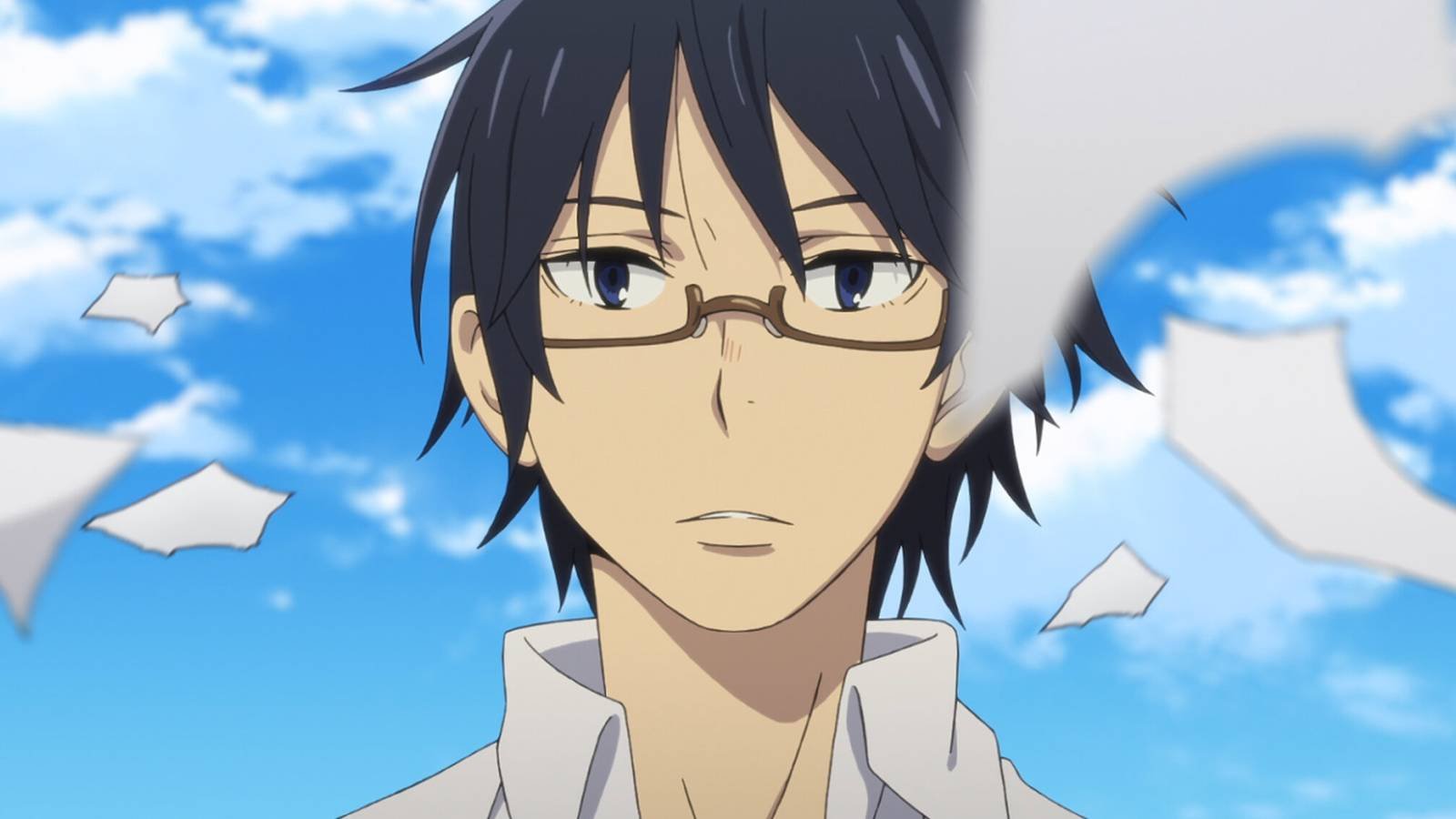
Satoru Fujinuma is a struggling manga artist with a strange ability called “Revival,” which sends him back in time moments before a life-threatening event. But when his mother is murdered, Revival sends him 18 years into the past, back to his childhood in 1988. There, he realizes that the murder is connected to a series of child abductions that occurred in his hometown.
Childhood Trauma and Suspense
Watching a 10-year-old with an adult’s mind navigate school, rebuild friendships, and protect a classmate named Kayo Hinazuki, seems normal on the surface, but this hints at a darker suffering because Satoru is racing against time to rewrite a tragedy that shaped his entire life. The anime is as much about solving a mystery as it is about healing wounds that were never acknowledged. The ending sparked debate, but Erased is still unforgettable.
‘Anohana: The Flower We Saw That Day’ (2011)
Anohana: The Flower We Saw That Day is set years after the death of Menma. A group of estranged friends are brought back together when their childhood friend’s ghost appears to Jinta, the former leader of their group. Menma’s presence is gentle, but she cannot move on until her final wish is fulfilled, and she doesn’t remember what it is.
The Enduring Bonds of Friendship
A heartbreaking masterpiece, the anime unfolds over 11 episodes and builds towards a cathartic finale. Each character carries their own version of grief, and the process of uncovering Menma’s wish becomes a way for them to confront the past. The character designs by Masayoshi Tanaka and the animation by A-1 Pictures give the story warmth, but the sorrow still hits with precision.
‘The Promised Neverland’ (2019)
In Grace Field House, children live happily under the care of their “Mama,” Isabella, awaiting adoption. But when one of them, Conny, is sent away and never returns, Emma and Norman discover the horrifying truth that the orphanage is a farm, and they are all being raised as food for demons. What follows is a cerebral escape plan as Emma, Norman, and Ray try to outwit Isabella and make it out alive.
Hope Trapped in a Nightmare
What makes The Promised Neverland so crushing is not just the premise, but the way the children cling to hope knowing the odds. Emma’s optimism, Norman’s brilliance, and Ray’s cynicism form a trio that carries the narrative forward. But protecting innocence in a world built on evil and betrayal is no joke, so every episode tightens the suspense and heightens the dread. It’s not the kind of sad that makes you cry, but the kind that leaves you haunted.
‘Your Lie in April’ (2014)
The certified tearjerker, Your Lie in April follows Kousei Arima, once a piano prodigy who trained under his strict mother to play with mechanical precision. But after her death, he loses the ability to hear the sound of the piano and retreats from music entirely. His world shifts when he meets Kaori Miyazono, a free-spirited violist who pulls him back into music. But she’s hiding a secret of her own.
The Fleeting Nature of Life
Flawlessly combining the beauty of classical music with the raw emotions of life, the anime ends on a note that redefines everything. The soundtrack, paired with A-1 Pictures’ luminous animation, creates a dreamlike atmosphere, but all the performances are a farewell. Kaori’s energy hides a fragility that becomes more apparent with each episode and Kousei’s growth is more painful than inspiring. At the end of the day, the message is about the beauty of having lived, even briefly, in someone’s light.